
Weather Factors That Influence MLB Game Results

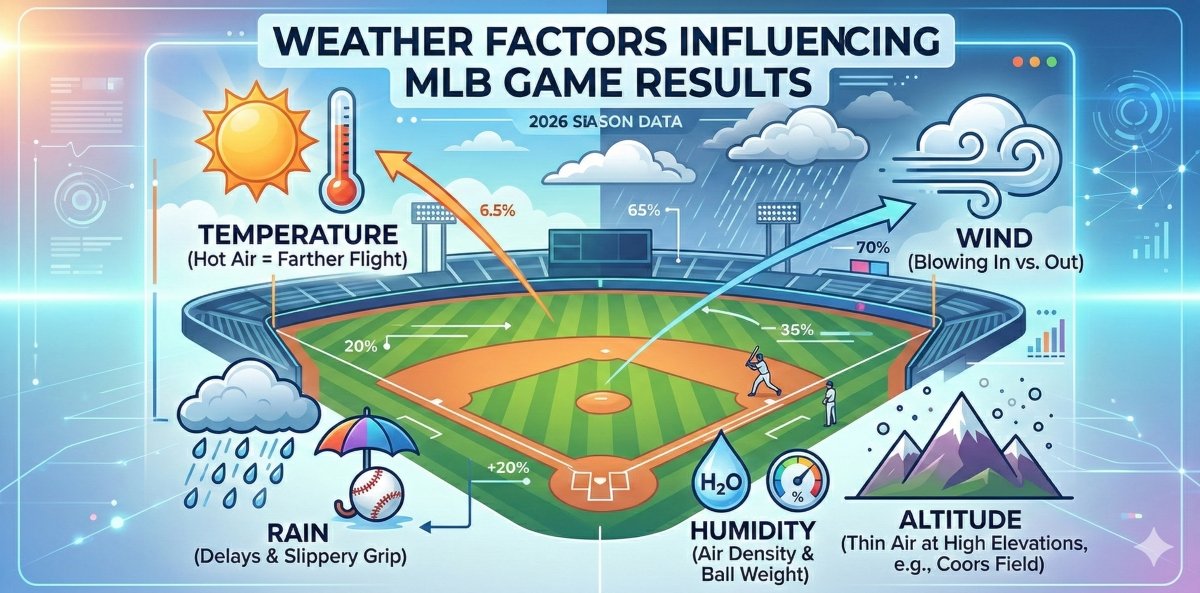
Baseball is a game of inches, and sometimes those inches are decided by the air itself. Unlike basketball or hockey, which are played in controlled indoor climates, Major League Baseball (MLB) is an outdoor sport. This means the weather is not just a background setting; it is an active player in every game. From the way a ball travels through the air to how a pitcher grips the leather, the elements can completely change the outcome of a match.
In 2026, teams are using more data than ever to track these changes. Understanding how the environment impacts the game can help fans and bettors see beyond the players’ skills and into the science of the sport.
Temperature: The Secret to Home Runs
One of the most important factors in any baseball game is the heat. Physicists have shown that baseballs travel much farther in warm air than in cold air. When the air is hot, the molecules are spread further apart, making the air “thinner.” This means there is less resistance or “drag” pushing against the ball as it flies.
In a hot summer game in Texas or Florida, a ball hit with the same force might travel 15 to 20 feet farther than it would in a chilly April game in Chicago. For a hitter, this is the difference between a long fly ball that is caught at the wall and a home run that clears the fence.
However, heat also affects the players. High temperatures can cause pitchers to tire out more quickly. When a pitcher is exhausted, their “velocity”—the speed of the ball—often drops, and their throws become less accurate. This is why high-scoring games are much more common during the hot months of July and August.
Humidity and the “Heavy Air” Myth
For a long time, many fans believed that “heavy” humid air made it harder for a ball to travel. In reality, science shows the opposite. Moist air is actually less dense than dry air. This is because water vapor molecules are lighter than the nitrogen and oxygen molecules they replace.
This means that on a very humid day, the ball should technically fly slightly farther. However, there is a catch. MLB now requires every stadium to use a “humidor,” which is a temperature-controlled room to store baseballs. If a ball is stored in a humid environment, it absorbs moisture and becomes slightly heavier and softer. A “wet” ball does not bounce off the bat as fast as a dry, hard ball. This technology has helped balance the game, preventing humidity from making every game a home run contest.
The Wind: A Game of Direction
Wind is perhaps the most visible weather factor. A strong gust of wind can turn a guaranteed home run into a routine out, or blow a pop-up into the stands.
Wind Blowing In: When the wind blows from the outfield toward the hitter, it acts like an invisible wall. It slows the ball down, keeping it inside the park. These games usually have very low scores.
Wind Blowing Out: When the wind blows toward the outfield, it carries the ball. Even a weak hit can sail over the fence. Pitchers hate these days because even their best pitches can be turned into home runs.
Crosswinds: These are the most difficult for fielders. A ball hit high in the air might start over center field but get pushed toward left field by a strong side-wind. This leads to more errors and “misplayed” balls.
In 2026, stadiums like Wrigley Field in Chicago are famous for these shifts. Fans check the wind direction before every game because they know it determines if the match will be a pitcher’s duel or a high-scoring battle.
Air Pressure and Altitude: The Coors Field Effect
Air pressure is another invisible force. At high altitudes, the air is much thinner. This is why Denver, Colorado—the “Mile High City”—is the most famous place for home runs in the world. At Coors Field, the ball encounters very little resistance.
But altitude does not just help hitters; it hurts pitchers. In thin air, a “breaking ball” (like a curveball or a slider) does not move as much. These pitches rely on the air to push the ball in different directions. Without that air pressure, the ball stays straight, making it much easier for the batter to hit.
The Pitcher’s Grip and Rain
Even a light mist can change a game. A baseball is made of leather, and when it gets damp, it becomes slippery. A pitcher needs a perfect grip to put spin on the ball. If the ball is even slightly wet, the pitcher might lose control, leading to more “walks” or even hitting the batter by mistake.
In 2026, MLB has strict rules about when to stop a game for rain. If the dirt on the “pitcher’s mound” becomes too muddy, it becomes dangerous for the players to move quickly. A slippery field can lead to leg injuries during a fast sprint to first base.
A New Era of Weather Tracking
As we move through the 2026 season, technology is helping us understand these factors in real-time. Apps now provide “Ball Flight Weather” reports that tell fans exactly how many extra feet a ball will travel based on the current conditions.
Weather is the one thing a coach cannot control. No matter how much a team practices, they are always at the mercy of the wind and the heat. By learning how these factors work, you can appreciate the game on a much deeper level. The next time you see a ball sail over the fence, remember: the batter provided the power, but the weather might have provided the help.