

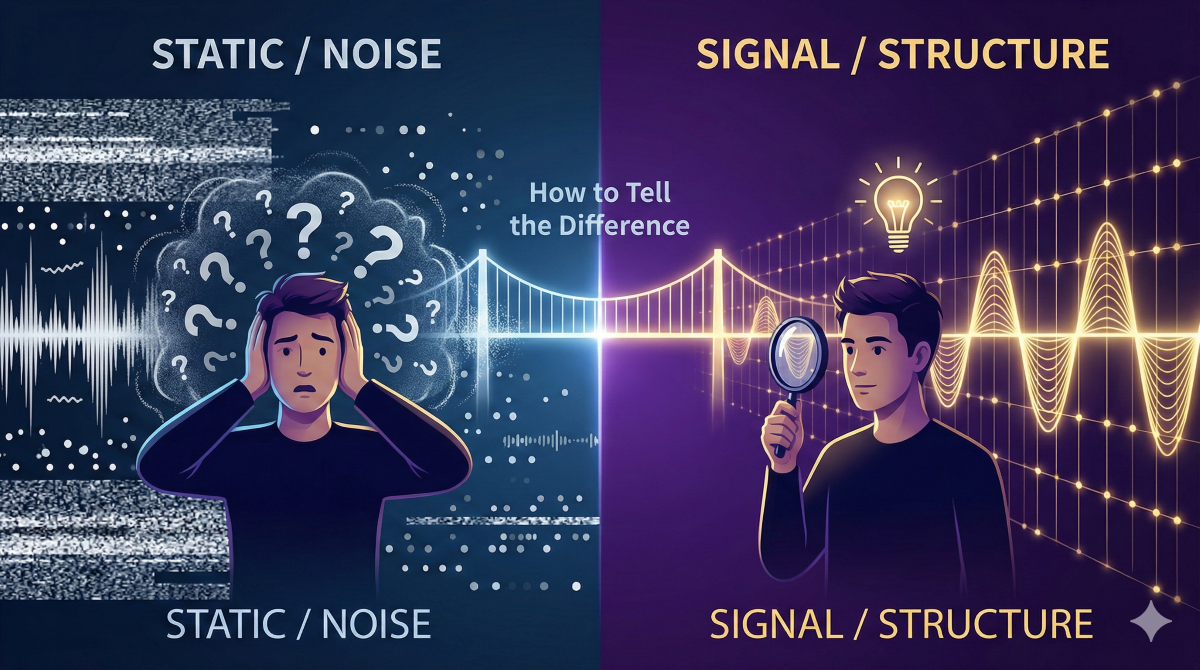



The idea that gambling behavior is driven by the desire to win money feels obvious. It is also largely incorrect once you observe sustained play over time. In continuous gambling environments, winning is not the primary behavioral driver. In many cases, it becomes irrelevant—or even disruptive. To understand why, it is essential to separate why people start from why they continue.
Initial participation is often outcome-oriented. A player enters with the idea that winning is the goal. Continuation, however, follows a different logic. After repeated cycles, behavior shifts away from outcomes and toward maintaining a specific experiential state. This shift is explored in Related article, which details why winning is not the ultimate reinforcement for sustained engagement.
Winning Interrupts Continuity
A large win disrupts the flow of play. It introduces pauses, heightened attention, and external awareness. Credits must be acknowledged. Sensory feedback escalates. From a behavioral perspective, these interruptions matter.
Losses, by contrast, often pass quietly. They are processed rapidly and followed immediately by the next interaction. Over time, users implicitly learn that losses preserve continuity, while wins introduce friction. This produces an inversion of reinforcement: the behavior that maintains uninterrupted engagement feels more compatible with the system than the behavior that halts it.
The Real Reinforcer Is Absorption
Behavior persists because the system delivers a stable internal state. Narrowed attention, reduced self-monitoring, and temporary relief from external pressures function as the true reinforcers. Money becomes secondary because it does not reliably produce this state.
This explains why users often report playing “to relax,” even while losing. The value lies in what the experience removes—noise, pressure, self-awareness—rather than what it provides. Winning does not consistently enhance this effect.
Variable Outcomes Do Not Mean Variable Motivation
It is common to assume that variable rewards drive excitement and persistence. In practice, variability matters less than consistency. The system delivers predictable pacing, predictable feedback, and predictable interaction regardless of outcome.
Outcomes fluctuate; experience does not. Because the experiential layer remains stable, motivation does not hinge on whether the last result was positive or negative. Users continue because the next interaction will feel essentially the same.
Why Expected Value Fails as an Explanation
Economic models assume users track gains and losses and adjust behavior accordingly. In continuous systems, this assumption fails. Outcomes are rapid, abstracted, and uninterrupted. There is no natural pause for evaluation.
Expected value becomes irrelevant to moment-to-moment behavior because calculation is structurally discouraged. Users are not optimizing. They are flowing. The system replaces evaluation with rhythm and repetition.
Loss Tolerance Is a Feature, Not a Trait
High tolerance for loss is often framed as a personal characteristic. In reality, it is largely situational. When losses are small, frequent, and seamlessly integrated, they stop functioning as deterrents. They become the cost of remaining engaged.
This adjustment does not require denial or irrational belief. It emerges naturally from repeated exposure to an environment where loss does not meaningfully alter experience. This dynamic aligns closely with the structural insight that losses fail to discourage behavior when they do not disrupt engagement, as explained in Additional information.
Why Stopping Rarely Follows Losses
If behavior were driven by winning, losses would trigger disengagement. In practice, they rarely do. Sessions typically end due to interruption: depleted credits, physical fatigue, or external obligations. Losses do not contradict the goal of staying engaged; they only matter when they break continuity entirely.
Summary
To understand sustained behavior, the assumption that users are chasing money must be abandoned. Money explains entry. It does not explain persistence. Persistence is explained by how effectively a system delivers a stable, absorbing state while minimizing friction and reflection.
Recent 2024 behavioral research supports this distinction, showing that sustained engagement in repetitive digital systems is driven more by absorption and attentional stability than by outcome-based reinforcement, as outlined in Current Opinion in Behavioral Sciences, 2024.
Once behavior is viewed through this lens, familiar puzzles resolve themselves. Stopping feels abrupt rather than chosen because the system is structured around continuity rather than reward.