Goyang Insider

The Information Hierarchy in Sports Prediction Markets

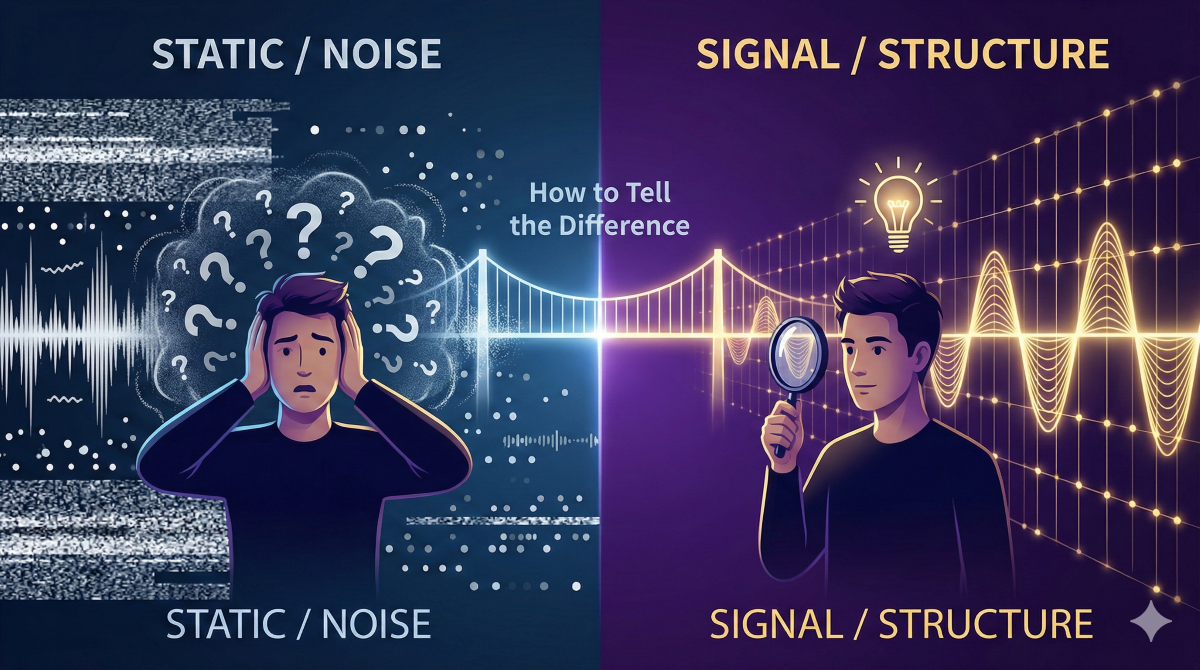
Sports‑based prediction markets do not treat all information equally. Some inputs move prices instantly, while others leave almost no trace. These differences follow a clear hierarchy that determines how information is weighted, when it becomes important, and how strongly it influences implied probabilities.

This vertical distribution of data is a core element of the Additional information, which examines how different tiers of access and data quality influence market movements. Understanding this hierarchy explains why prices shift at specific moments. As noted in comparisons between Related article, markets tied to real‑world events require far more complex information processing than systems driven by internal randomization.

Three Levels of Information and Their Pricing Power

Prediction markets classify information not by importance alone but by its ability to change uncertainty. The market prioritizes information that materially alters probability estimates.

Level 1: Structural & Confirmed Information

This is the highest tier. It includes verified, objective changes such as official injury confirmations, starting lineups, and significant weather shifts. These inputs directly alter probability estimates and almost always trigger immediate price adjustments because they remove a layer of unknown risk.

Level 2: Analytical & Contextual Information

This tier includes advanced performance metrics, historical matchup data, and tactical insights. These factors shape the initial modeling that produces opening prices. However, because they are often already incorporated into early estimates, they rarely cause major price movement close to the event unless a new analytical model gains sudden widespread adoption.

Level 3: Narrative & Perceptual Information

This includes media narratives, public sentiment, and “momentum” interpretations. These inputs have low statistical accuracy but can strongly influence collective behavior. Their impact on prices is indirect, driven by shifts in participation rather than changes in underlying probability.

How Liquidity Filters Information

Liquidity determines how strongly each information tier affects prices. In low‑liquidity markets, narrative‑driven information can dominate, and even minor news can cause large, volatile swings. Conversely, high‑liquidity markets resist sentiment‑driven movement and react primarily to Level 1 structural information, producing more stable and refined probability estimates. Liquidity acts as a filter that separates meaningful signals from noise.

Extending the Concept to Casino‑Style Systems

While sports‑based markets reveal the value of information through price movement, casino‑style systems embed probability logic directly into their design.

  • Embedded Probability: Casino games use fixed outcome sets and known probability distributions to create predictable long‑term expectations.

  • Pricing Structure: Payout ratios function as prices with built‑in margins, even though they are not displayed as market odds.

  • Bias and Liquidity: Player behavior cannot change the mathematical expectation, but higher participation (liquidity) causes results to converge more quickly toward theoretical averages.

Summary

The information hierarchy is the invisible framework that determines how probability becomes price. Despite their differences, both systems rely on the same underlying mathematics: they are not about predicting outcomes but about managing uncertainty. For more on the economic theory of how information is incorporated into prices, a foundational resource is the Efficient-market hypothesis on Wikipedia.

Casino Games vs. Sports‑Based Prediction Systems: Key Structural Differences

Casino‑style games and sports‑based prediction systems are often grouped under the broad category of “gambling,” yet they differ significantly in structure, risk dynamics, regulatory focus, and user experience. Understanding these differences is essential for cultural literacy, education, and balanced discussion.

This article explains the core distinctions between the two from a neutral, informational perspective. These structural differences also help explain why regulators apply different oversight mechanisms and legal standards to each activity, as discussed in regional regulatory comparisons. To better grasp the fundamental mechanics behind these platforms, it is helpful to look at a Related article which breaks down the mathematical and psychological drivers of each.

How Outcomes Are Determined

The primary difference lies in the origin of the result. In a casino, the outcome is generated by a closed system; in sports, the outcome is an external event that the system merely tracks.

Casino‑Style Games

Casino games—such as slots, blackjack, or roulette—are built around game‑based mechanisms. Outcomes are determined by:

  • Random Number Generators (RNGs): Software that produces unpredictable sequences.

  • Fixed Mathematical Systems: Pre‑defined probability structures (e.g., the 38 pockets on a roulette wheel).

  • Instantaneous Cycles: Results are generated and resolved entirely within the game’s hardware or software.

Sports‑Based Prediction Systems

Sports‑based systems rely on real‑world events such as football, basketball, or baseball. Outcomes depend on:

  • Human Performance: Athlete fitness, team strategy, and psychological form.

  • Environmental Variables: Weather conditions, home-field advantage, and officiating.

  • Delayed Resolution: Results take time to unfold over the course of a match or season.

Skill vs. Chance: The Role of Information

While both involve risk, the way participants interact with that risk varies based on the availability and utility of data.

  • Casino Games: Even when basic strategies exist (such as “Basic Strategy” in Blackjack), the house maintains a mathematical edge that cannot be overcome by information alone. Randomness is the dominant factor.

  • Sports‑Based Systems: Participants leverage team and player analysis, historical performance data, and statistical modeling. Information literacy and analytical skill significantly affect the quality of predictions, even though unpredictable “upsets” remain part of the game.

Risk Structure and Timing

The speed and frequency of participation are key psychological differentiators.

  • Casino Games: Results are immediate, and decisions occur in rapid, repeated cycles. This structure is designed around high-frequency, short-term engagement.

  • Sports‑Based Systems: Decisions are tied to real-world schedules. Users often wait hours or days for a match to conclude, which naturally encourages pre-event research and a more deliberate pace of participation.

Comparison Overview

CategoryCasino‑Style GamesSports‑Based Prediction Systems
Outcome BasisRandomized game mechanics (RNG)Real-world sports results
Role of SkillLimited (strategy-capped)High (analysis‑driven)
Time StructureInstant outcomes / High frequencyEvent-dependent / Low frequency
Data UseMinimal (probabilities are fixed)Extensive (dynamic statistics)
User RolePlayer interacting with a systemPredictor interpreting real events

Regulatory Focus and Educational Value

Because the risks differ, the oversight must follow suit. Casino regulation emphasizes the integrity of the machine (RNG audits and payout transparency), whereas sports regulation focuses on the integrity of the athlete (monitoring for match-fixing or point-shaving).

From an educational standpoint, casino systems are excellent for teaching the Law of Large Numbers and expected value. Sports-based systems, conversely, are useful for teaching predictive modeling, data interpretation, and how to assess risk amidst human variables.

Conclusion

Recognizing these distinctions is essential for responsible, informed, and balanced discussion. Treating them as identical oversimplifies their structure and social function. For an authoritative, in-depth look at casino game mechanics and fairness, the official Glossary of Gaming Terms from the American Gaming Association is a valuable resource.

Legal Differences in Gambling Regulation Across Regions

Gambling laws are not governed by a single global standard. Instead, they reflect each region’s legal traditions, cultural attitudes toward risk, and differing views on the role of the state in regulating gambling‑related activities. As gambling has moved online and crossed national borders, these regional differences have become more visible—and more consequential.

Understanding how gambling laws diverge across regions helps explain why enforcement, licensing, and consumer protection vary so widely around the world. These regulatory frameworks are often categorized into specific legal models that balance risk, accessibility, and supervision, as detailed in Related article. As discussed in cultural acceptance studies, social values often shape how these laws are written, interpreted, and enforced.

Drivers of Regional Legal Differences

Regional regulatory models are shaped by several foundational factors that influence not only the legality of gambling but also the strictness and priorities of control.

  1. Legal Traditions: Common Law jurisdictions often rely on case‑based interpretation and flexible regulatory frameworks, whereas Civil Law jurisdictions tend to codify detailed statutory rules.

  2. Government Dependence on Revenue: Some governments rely heavily on gambling‑related taxation for public revenue, which can influence how permissive their models become.

  3. Public Health Perspectives: Regions differ in whether gambling‑related harm is viewed as an individual responsibility or a broader social issue requiring public intervention.

  4. Regulatory Infrastructure: The administrative capacity to enforce laws and monitor digital activity varies significantly between countries.

Major Regional Regulatory Models

The global landscape can be broken down into three primary archetypes: Licensing, Monopoly, and Prohibition.

Europe

Europe does not operate under a unified gambling law. Each country maintains regulatory autonomy, resulting in a fragmented landscape. Many nations allow private operators through open licensing systems but enforce strict rules on consumer protection and advertising.

North America

Regulation is highly decentralized. In both the United States and Canada, authority is delegated to states or provinces, creating a patchwork of legal and illegal jurisdictions—even between neighboring regions.

Asia‑Pacific

Many countries adopt a restrictive baseline, emphasizing prohibition while allowing limited, controlled exceptions such as designated casino zones or state‑run lotteries. In regions like the Philippines, a centralized body like PAGCOR serves as both operator and regulator.

Middle East

Most countries maintain comprehensive bans based on religious and legal principles. Gambling is treated as a criminal offense, and cultural norms align closely with legal prohibitions.

Challenges of Cross‑Border Enforcement

The digital nature of online gambling complicates enforcement. An operator licensed in one country may be considered illegal in another, and enforcing domestic laws against foreign platforms is often technically difficult.

As a result, many governments rely on indirect enforcement tools, such as:

  • Payment blocking through financial institutions.

  • Domain access restrictions (IP filtering).

  • Administrative penalties for unlicensed activity.

Conclusion

Gambling regulation continues to evolve in ways that reflect regional priorities rather than converging toward a single global model. Jurisdictions with clear, enforceable rules tend to maintain transparent and manageable markets, while inconsistent systems risk pushing activity into unregulated spaces.

Understanding these legal differences provides valuable context for interpreting global regulatory trends and assessing how societies respond to digital‑era risks. For a detailed overview of the complex legal landscape in one specific country, you can refer to the official U.S. Government’s guide to Gambling Laws on USA.gov.

Cultural Acceptance of Gambling: Regional Differences and Global Perspectives

Cultural attitudes play a decisive role in how gambling‑related activities are perceived, regulated, and socially accepted. While laws determine what is formally permitted on paper, culture determines what is practically tolerated. These cultural norms shape public opinion, political decision‑making, and enforcement priorities, resulting in dramatically different gambling environments around the world.

Acceptance of gambling exists on a spectrum influenced by history, religion, economics, and collective experience. This divergence in perception is further explored in Additional information, which analyzes how cultural receptivity directly influences the design of regional regulatory frameworks. Understanding these cultural differences helps explain why gambling laws vary so sharply between regions. It also provides essential context for how legal frameworks operate in real social environments.

Regional Cultural Perspectives

  • Europe: In many parts of Europe, gambling is widely accepted when properly regulated. Long‑standing traditions such as national lotteries and horse racing have normalized gambling as part of leisure culture rather than a moral issue.

  • North America: Cultural attitudes vary significantly by region. Religious influence, local values, and differing views on personal responsibility create a patchwork of perspectives.

  • Asia‑Pacific: Many societies in this region associate gambling with financial harm or social instability. Caution and restraint are emphasized, reflecting broader cultural values around risk and responsibility.

  • Middle East: Religious and moral frameworks shape a strong cultural rejection of gambling. Legal prohibitions and cultural norms align closely, creating environments where gambling is socially unacceptable.

Key Factors That Shape Cultural Acceptance

Cultural acceptance is not merely a matter of personal preference; it is shaped by broader social structures:

  • Historical role of gambling in community life

  • Religious or moral teachings about chance and risk

  • Public awareness of gambling‑related harm

  • Associations between gambling and sports, leisure, or vice

These factors influence whether gambling is seen as entertainment, risk, opportunity, or moral concern.

Cultural Acceptance vs. Legal Reality

A critical insight is that cultural acceptance does not always align with legal status. In some regions, strict laws coexist with culturally tolerated informal markets. In others, gambling may be legal but socially discouraged. These gaps can lead to selective enforcement, informal participation, or public resistance to regulatory changes.

Cultural attitudes continually shape how gambling laws are written, enforced, and revised. For a concrete example of how policy is formed in one region, a key framework can be found in the Gambling Commission’s Licensing Objectives in the United Kingdom. This is directly relevant as seen in the context of Related article, which discusses how online gambling laws operate within these complex cultural frameworks.

Summary

The interaction between culture and law creates a unique regulatory footprint for every nation. While global digital platforms attempt to standardize the experience, local cultural values remains the primary filter through which gambling is judged and governed. Understanding this relationship is key to navigating the global landscape of regulated entertainment.

Online Gambling Laws and Regulations: A Global Legal Overview

The rise of digital platforms has shifted gambling activity from physical venues to borderless online environments. This transition has forced governments to adapt legal frameworks originally designed for casinos and betting shops to an ecosystem where location, enforcement, and user behavior operate under entirely different conditions. As a result, online gambling regulation has become one of the most complex and fragmented areas of modern law.

Despite significant differences between countries, most online gambling laws are built around similar policy concerns. As seen in global sports engagement cultures, each nation’s cultural and social attitudes strongly influence the strictness and direction of its regulatory approach. This evolving landscape is further detailed in the Related article, which explores the regional legal models and structural differences that define the global regulatory terrain.

Why Online Gambling Is Regulated Differently From Offline Gambling

Online environments introduce risks and legal challenges that do not exist in physical settings. Digital access removes natural barriers such as location, operating hours, and face‑to‑face identity verification. For this reason, regulators treat online gambling not as an extension of traditional gambling, but as a distinct category requiring its own safeguards.

Key regulatory differences typically arise from:

  • Remote access that increases the frequency and speed of participation

  • Difficulty verifying age and identity online

  • Cross‑border operations involving multiple legal jurisdictions

  • Lack of a physical presence for operators within the user’s home country

Licensing Systems and Consumer Protection Measures

Licensing is the foundation of most legal online gambling markets. A licensing regime typically requires financial stability, technical integrity of digital platforms, and compliance with operational standards set by regulatory authorities. Licenses give regulators administrative control over operators and establish accountability.

To protect consumers, many jurisdictions mandate:

  • Age and identity verification (KYC): Mandatory “Know Your Customer” protocols to prevent underage access.

  • Responsible Gaming Tools: Deposit limits, time limits, and self‑exclusion options.

  • Technical Fairness: Independent technical testing to ensure fairness and system reliability.

Financial Controls and Anti‑Money Laundering (AML) Requirements

Because online platforms process large volumes of digital transactions, they are closely integrated with AML and financial compliance systems. As of 2026, operators in many jurisdictions must follow strengthened standards aligned with the FATF Recommendations, which mandate that all casinos (including internet-based ones) perform customer due diligence and report suspicious transactions.

Advertising Restrictions and Taxation Policies

Digital advertising can target minors and vulnerable groups with precision, prompting strict regulatory controls. Common restrictions include limits on promotional messaging, mandatory responsible‑use warnings, and restrictions on advertising placement. Taxation policies also vary widely; some countries impose taxes on gross gaming revenue (GGR), while others apply transaction‑based levies. These structures influence whether operators choose to participate in regulated markets.

Cross‑Border Enforcement and Policy Trade‑Offs

Governments often attempt to restrict unlicensed operators through payment blocking via financial institutions or domain access restrictions. However, technical limitations make complete enforcement difficult. For this reason, many jurisdictions adopt a regulated‑market approach rather than an outright ban, aiming to protect vulnerable populations while maintaining oversight.

Global Cooperation and Regulatory Standards

International regulatory bodies increasingly collaborate to share best practices. The International Association of Gaming Regulators (IAGR), for example, provides a forum for discussing cross-border enforcement and regulatory transparency. Their mission focuses on advancing the effectiveness of gaming regulation in an increasingly connected world.

Understanding these frameworks helps contextualize how different countries manage digital‑era risks and why regulatory models vary so widely.

Global Differences in Sports Engagement Culture and the Korean Perspective

Sports engagement varies widely across countries, shaped by legal frameworks, social values, and the ways people participate in sports. In some regions, sports‑related activities are viewed as a natural extension of fandom and entertainment. In others, including Korea, they are approached with strict caution or legal restrictions.

This article examines global sports engagement cultures from an educational, non‑promotional perspective and explains how they differ from Korean cultural norms. This divergence in perception is often rooted in deep-seated societal values, as explored in Related article, which analyzes how cultural receptivity shapes the design of regional regulatory frameworks.

How Sports Engagement Is Viewed Internationally

In many countries, sports engagement extends beyond simple spectating. It is often treated as a data‑driven hobby that incorporates statistics, analysis, and strategic thinking. These activities typically operate within clear regulatory systems that emphasize consumer protection and responsible participation.

In these environments:

  • Sports fandom and analytical hobbies naturally overlap

  • Statistical interpretation becomes part of how fans understand the game

  • Regulatory bodies emphasize transparency and responsible use

  • Media integrates real‑time data and analysis into sports coverage

Regional Characteristics of Sports Engagement Culture

  • United Kingdom: Deeply embedded in everyday life with a strong connection between major sports (e.g., football, horse racing) and analytical communities.

  • United States: Rapid growth of data‑driven sports engagement following state‑level legalization, heavily integrating analytics and media coverage.

  • Europe (General): Treated as a regulated entertainment industry with an emphasis on participant responsibility and data literacy.

  • Australia: High engagement during major sporting events, with public discussions focusing on balancing accessibility with consumer safeguards.

The Korean Perspective: A Prevention‑Focused Culture

Korea approaches sports engagement very differently due to strict legal restrictions and a strong social stigma surrounding gambling‑related activities. Cultural values emphasize restraint, responsibility, and public safety, resulting in a fan culture centered on spectatorship rather than analytical participation.

Korean systems prioritize harm prevention and addiction awareness over entertainment. This creates a clear contrast between the entertainment‑oriented approach common in many Western countries and the risk‑prevention approach that defines Korean policy and public perception.

Summary Comparison

CategoryMany Overseas RegionsKorea
Legal EnvironmentRegulated and permittedHighly restricted
Social PerceptionEntertainment / analytical hobbyNegative / risk‑focused
Educational FocusData literacy, statistical interpretationAddiction prevention, risk awareness
Media IntegrationCommon in sports broadcastsStrictly limited

Responsible Participation and Global Standards

Despite regional differences, global trends increasingly emphasize consumer protection, psychological risk awareness, and transparency in regulation. Understanding these cultural contexts helps individuals interpret global sports media responsibly and maintain healthy perspectives within their own legal boundaries.

For example, research into the Additional information highlights how market-driven systems evolve under different regulatory environments. For more on Korea’s specific legal stance, an official government summary can be found in the Korea.net overview on Gaming & Lottery policies.

A Guide to Understanding Probability and Implied Probability Through Numerical Signals

Systems that rely on probability are often mistaken for prediction engines, yet their internal logic is built on pricing mechanisms. The numerical values displayed in such systems are not declarations about what will happen next. They are mathematical expressions of probability that have been adjusted to function as prices within environments where risk must be managed.

To interpret these numbers correctly, it is essential to distinguish between probability and implied probability. This mathematical conversion is a core element of Related article, which explores the logic hidden behind displayed odds. Failing to separate the two can make numerical signals feel arbitrary or misleading. Understanding the distinction reveals that these values are not guesses but components of a structured system. As discussed in the role of liquidity in probability accuracy, greater participation helps implied probabilities converge toward more reliable estimates.

Theoretical Probability: A Mathematical Perspective

Probability describes how often an outcome should occur when the same conditions are repeated indefinitely. It is a theoretical construct grounded in mathematics, not certainty. In real‑world environments—especially those involving human performance, incomplete data, or variable conditions—true probability cannot be directly observed. It must be estimated.

Thus, probability in practice is always an approximation, a model‑based representation of reality rather than a measurable truth. True probability exists independently of how people behave or how prices move; a shift in pricing does not change the underlying likelihood of an event.

What Implied Probability Actually Represents

Implied probability is derived from a system’s pricing structure. It answers the question: “What level of likelihood is suggested when this price is converted into a percentage?”

Examples of price‑to‑probability conversions:

  • A price of 2.00 implies a 50% likelihood

  • A price of –110 implies roughly 52.4%

  • A price of +150 implies roughly 40%

These figures do not describe real‑world frequencies. They describe how the system has priced the outcome based on structure, margins, and participation. Implied probability is not a prediction; it is a market‑driven output shaped by format, risk management, and demand.

Why Implied Probability Is Inflated: The Overround Effect

Many pricing systems intentionally inflate implied probabilities so that the total exceeds 100%. This inflation—often called an overround—represents the system’s built‑in margin.

In a perfectly neutral environment, the sum of all implied probabilities would equal 100%. In real systems, totals commonly reach 104% to 108%. Because of this structural expansion, implied probabilities almost always exceed true probabilities when viewed across the entire set of outcomes.

Pricing vs. Prediction

Pricing and prediction serve different purposes. Prediction aims to identify the most likely outcome with maximum accuracy, while pricing aims to maintain long‑term sustainability by managing risk across thousands of events.

Because pricing must account for demand and risk distribution, popular outcomes often receive higher implied probabilities than their true likelihood would justify. Prices are fundamentally economic signals, and their predictive value is secondary.

Summary

Separating probability from implied probability allows numerical values to be interpreted as signals, not truth statements. Human‑driven systems behave more like exchanges than forecasting tools. Price movements reflect flows of information and participation as much as they reflect likelihood. For a foundational, mathematically precise definition of probability that clarifies its theoretical basis, please see the article on Probability Theory from Wikipedia.

The Role of Liquidity in the Accuracy of Probability Estimates

Probability does not reveal itself through calculation alone. It becomes more reliable through participation. Initial estimates may be built from models and historical data, but their accuracy depends on how a system responds to them. Liquidity—the volume and diversity of participation—is the mechanism that transforms theoretical probability into a more trustworthy approximation.

This evolution often reflects the broader context of Additional information, which examines the background of gradual market expansion and the phased introduction of systemic structures. Without liquidity, probability estimates remain provisional. With liquidity, they are tested, pressured, and refined until they reflect collective judgment rather than isolated assumptions. As discussed in the dynamics of public bias and probability distortion, early estimates often contain psychological or structural distortions that only active participation can correct or amplify.

What Liquidity Means in Human‑Driven Systems

Liquidity refers to both the amount of capital or activity flowing through a system and the number of independent participants contributing to it.

  • High liquidity reflects many competing viewpoints expressed through meaningful participation, resulting in more stable and resilient estimates.

  • Low liquidity allows a small number of participants to exert disproportionate influence, producing more volatile and easily distorted estimates.

Liquidity does not guarantee accuracy, but it determines how resistant a system is to noise, bias, and extreme opinions.

Why Probability Requires Market‑Like Participation

True probability cannot be directly observed; it must be inferred. Systems that aggregate many independent perspectives allow probability estimates to evolve as new information enters.

When diverse signals interact:

  • Extreme opinions are diluted

  • Weak assumptions are challenged

  • Estimates converge toward a shared equilibrium

Liquidity forces probability to mature. As liquidity increases, it becomes harder for any single input to shift the estimate. Each new contribution must compete with the accumulated weight of prior activity, meaning only strong information can meaningfully move the system.

The “Closing Estimate”: Liquidity at Its Peak

In many probabilistic environments, the most reliable estimate is the one formed at the point of maximum participation—often referred to as the “closing” estimate.

This estimate is valued not because it is final, but because:

  1. The widest range of information has been revealed

  2. The largest number of participants has contributed

  3. The estimate has absorbed and responded to the strongest available signals

By the time liquidity peaks, the system has incorporated nearly all meaningful data, producing the most refined approximation of underlying probability.

What Liquidity Cannot Do

Liquidity improves the precision of probability estimates, but it does not create truth. It cannot eliminate randomness or prevent rare outcomes. Probabilistic systems remain approximations, and liquidity merely sharpens those approximations—it does not resolve uncertainty. Probability is always an estimate, and liquidity is a tool for refining it, not a mechanism for guaranteeing outcomes.

Summary

Liquidity plays a crucial role in transforming theoretical probability into a more accurate, resilient estimate. High liquidity stabilizes estimates by incorporating diverse perspectives and resisting distortion. Understanding liquidity clarifies why probability estimates evolve and why the most reliable estimates emerge only when participation is at its peak. For a foundational overview of the related economic theory, see the article on the Efficient-market hypothesis on Wikipedia.

Public Bias and Probability Distortion in Human‑Driven Systems

Systems built on probability often appear objective, but they are ultimately shaped by human behavior. Numerical outputs may look mathematical, yet the underlying “prices” reflect collective perception as much as statistical modeling. Public bias plays a central role in how probability signals are interpreted, reshaped, and sometimes distorted. Understanding this dynamic explains why implied probabilities can drift away from actual likelihoods.

These distortions are not accidental. They arise naturally in environments where human preference interacts with probabilistic structure. This phenomenon is particularly evident in how people perceive consecutive wins, a topic explored in Additional information, which examines the illusion of advantage that stems from outcome clustering. As discussed in the limits of single‑event probability, probability describes long‑term frequency, not individual outcomes—creating a structural gap that human behavior readily fills.

The Difference Between True Probability and Demand

True probability describes how often an outcome should occur under consistent conditions. It exists independently of opinion, popularity, or narrative. Demand, by contrast, reflects where people choose to direct their attention and resources. Human‑driven systems operate at the intersection of these two forces. They may begin with a probability estimate, but they must respond to shifts in collective behavior. When demand becomes imbalanced, the “price” moves—even if the underlying probability has not changed.

How Public Bias Manifests in Practice

Public bias refers to consistent patterns in how large groups interpret events. These patterns are emotional, narrative‑driven, and remarkably persistent across contexts. Common tendencies include favoring well‑known individuals, overvaluing recent performance, and trusting storylines more than long‑term data. These tendencies do not change what actually happens, but they do change how collective attention and resources flow through the system.

Why Systems Adjust to Public Bias

Human‑driven systems do not aim to publish the most accurate probability estimate. Their goal is to maintain stability, balance exposure, and manage risk. When collective behavior becomes lopsided, the system faces concentrated vulnerability. To reduce this imbalance, it adjusts its “prices.” These adjustments do not correct bias—they accommodate it. Implied probability shifts because human behavior shifts.

Favorite Bias and Recency Bias

Two of the strongest forms of public bias are:

  • Favorite Bias: People gravitate toward outcomes that feel safe, even when the difference in probability is small. This pushes the system to adjust its signals toward perceived certainty.

  • Recency Bias: A single impressive performance is often misinterpreted as the beginning of a trend. Systems adjust because collective behavior follows the narrative.

Even Efficient Systems Can Be Biased

Efficiency does not mean objectivity. An efficient system is one that rapidly incorporates information and demand. If demand is biased, the system will efficiently reflect that bias. Efficiency institutionalizes bias rather than eliminating it. Thus, numerical signals should be interpreted as economic indicators of attention, sentiment, and risk distribution—not as pure statements of probability.

Summary

Public bias does not change reality, but it changes the signals used to interpret reality. Probability describes how often an outcome should occur, while implied probability describes how that likelihood is reshaped by margins, demand, and human psychology. Understanding this distinction clarifies why human‑driven systems often drift away from objective likelihoods and toward the patterns of collective behavior. For a foundational look at the psychological models behind such distortions, the official summary of Nobel Prize-winning research in behavioral economics provides essential context.

The Limits of Probability in Single‑Event Outcomes

Probability is often mistaken for prediction. When people see a percentage attached to a possible outcome, they instinctively interpret it as a statement about what will happen next. But probability makes no promises about any individual event. It describes patterns that emerge only through repetition.

Understanding this structural tension is vital for analyzing any high-performance system. The inevitability of upsets in such environments is further explored in this Related article, which examines the structural necessity of loss within the framework of probability and volatility.

Probability Describes Frequency, Not Certainty

Probability applies to distributions of outcomes, not to isolated moments in time.

  • A 60% probability does not mean an event is “likely to happen next.”

  • It means that across many repeated trials, the event should occur roughly 60% of the time.

Each individual event remains uncertain. No matter how strong the probability appears, a single outcome is never guaranteed. This distinction is subtle but essential: probability governs tendencies, not destinies.

Why a Single Outcome Proves Nothing

A single event provides no meaningful evidence about whether a probability estimate was correct. If a low‑probability outcome occurs, that does not invalidate the underlying estimate; if a high‑probability outcome occurs, that does not confirm it. A single result is a sample size of one—and a sample of one contains no statistical insight. Probability cannot be judged in the moment; it can only be evaluated over time.

Variance: Why Short‑Term Results Deviate from Expectations

Variance describes how outcomes naturally spread around an expected average. Even when probabilities are accurate, short‑term results often deviate from expectations. Variance is not an error—it is the mathematical cost of uncertainty. If variance did not exist, the system would be deterministic rather than probabilistic.

Volatility: How Variance Feels Over Time

Volatility describes the emotional experience of variance as outcomes unfold.

  • High‑volatility environments produce large deviations from expectations, long streaks, and sharp swings.

  • Low‑volatility environments feel more stable and predictable.

Volatility does not change expected results. It changes how unpredictable the path toward those results feels.

Streaks Are Inevitable in Random Systems

Humans expect randomness to alternate evenly, so they assign meaning to streaks. But real random sequences naturally form clusters—a phenomenon related to the clustering illusion, where patterns in short sequences appear meaningful even though they arise from randomness itself. A streak does not indicate that probabilities have changed. It simply reflects the uneven way randomness unfolds.

Independence and Memory of Past Outcomes

Most probabilistic events are independent. That means the occurrence of one outcome does not influence the probability of the next one—a core principle of probability theory. Yet people often believe past outcomes influence future ones, falling into the illusion of momentum or the gambler’s fallacy. Probability does not “remember” the past; each event resets uncertainty.

Core Insight: Repetition Reveals Structure

Probability does not describe what will happen next. It describes what tends to happen over time. In the short term, variance dominates, making individual outcomes feel disproportionately significant. Only repetition reveals the underlying structure.

For example, understanding how odds communicate risk helps clarify why individual events can diverge from expectations even when probability is accurate—see Additional information for a related examination of risk representation in probabilistic systems.

External Perspective on Probability Misconceptions

Misinterpreting individual outcomes as proof of probability accuracy is a well‑recognized cognitive bias. According to Wikipedia’s entry on the Illusion of Validity, people frequently overestimate the predictability of events based on single outcomes rather than on aggregated data—a key trap that arises from misunderstanding how randomness and probability truly operate.