Goyang Insider

Understanding K League Playoff Formats

Introduction

As the 2026 Hana Bank K League season moves toward its conclusion, attention is turning to one of the most distinctive features of Korean football: the promotion and relegation playoffs. Unlike leagues with fixed membership, the K League uses a dynamic system where lower-ranked K League 1 teams face top-performing K League 2 sides to determine who will compete in the top division the following season. For fans, especially those new to Korean football, understanding this format is essential to appreciating how the league balances competitiveness, fairness, and opportunity.

Context: Promotion and Relegation in Korean Football

The K League is divided into two tiers:

  • K League 1: The top division, featuring Korea’s strongest clubs.
  • K League 2: The second division, where teams compete for promotion to the top flight.

At the end of each season, the system ensures that strong performers in K League 2 have a chance to move up, while struggling K League 1 teams risk dropping down. This structure keeps both divisions competitive and prevents stagnation.

Structure Explained: How the Playoffs Work

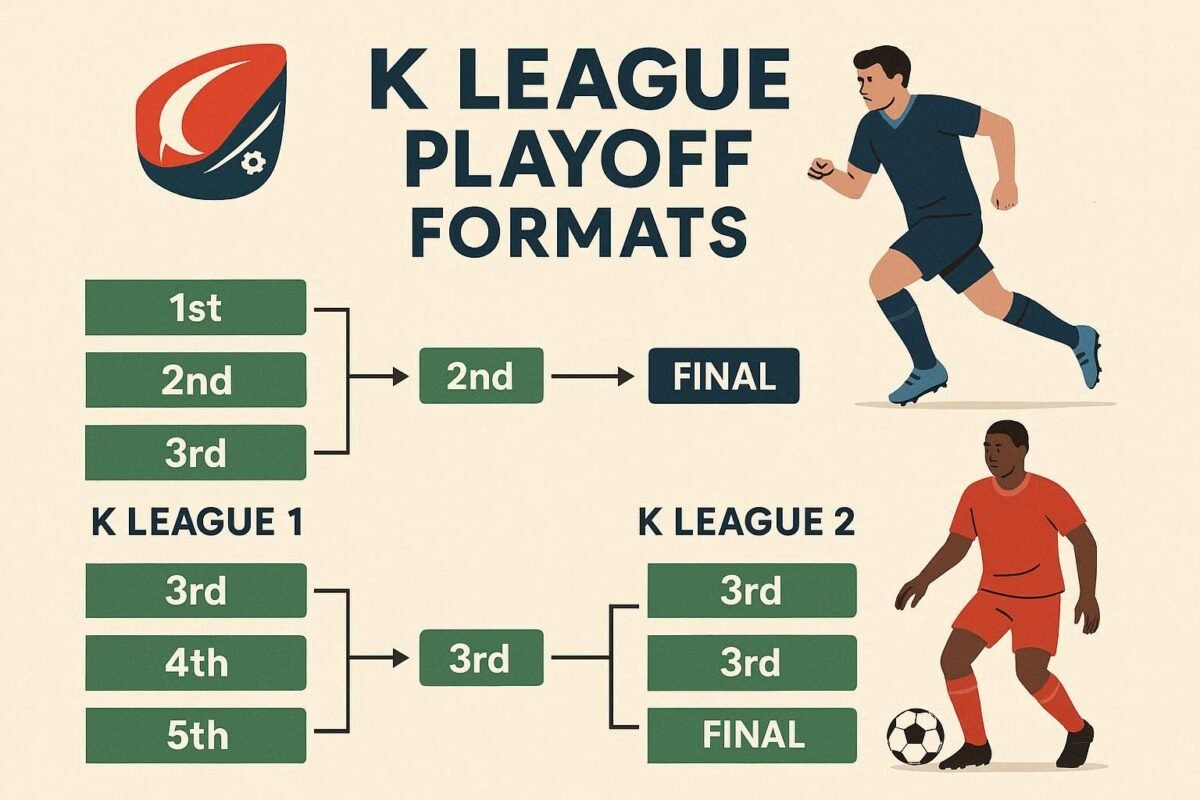
The playoff format is designed to reward consistent performance while maintaining excitement:

  1. Automatic Promotion:
    • The K League 2 champion earns direct promotion to K League 1.
    • This rewards season-long consistency, ensuring that the best-performing team moves up without additional hurdles.
  2. Playoff Pathway:
    • Teams finishing 2nd to 4th in K League 2 enter a playoff bracket.
    • The winner of this bracket faces the 11th-placed team in K League 1 in a two-legged playoff.
    • The victor of this final matchup secures a spot in K League 1 for the following season.
  3. Relegation Risk:
    • The 12th-placed team in K League 1 is automatically relegated to K League 2.
    • This ensures accountability for poor performance, keeping the league competitive.

This structure balances fairness (rewarding champions) with opportunity (giving multiple teams a chance at promotion).

Educational Value: Why This Format Matters

For beginners, the K League playoff system offers several lessons about how football leagues can be structured:

  • Balance of Merit and Opportunity: The champion is rewarded, but other strong teams still have a chance to rise.
  • High Stakes: Every match matters, especially late in the season, as playoff seeding can determine a team’s future.
  • Drama and Engagement: Fans remain invested until the very end, knowing that promotion and relegation battles can reshape the league.

This format demonstrates how Korean football ensures competitiveness across both divisions, keeping the sport engaging for players and fans alike.

Regional Relevance: Gyeonggi-do Clubs

For fans in Gyeonggi-do, the playoff format has direct relevance:

  • FC Anyang: A consistent contender in K League 2, Anyang often finds itself in playoff positions. Understanding the format helps local fans see how their team’s performance translates into promotion opportunities.
  • Suwon FC: Another Gyeonggi-do club, Suwon has experienced both promotion and relegation battles, showing how the system impacts regional sports culture.
  • Community Identity: Playoff runs energize local communities, creating excitement and civic pride around their clubs.

For Gyeonggi-do residents, the playoff format is not just a technical detail — it directly shapes the future of their teams and the vibrancy of local football culture.

Behavioral Insight: Fan Engagement

The playoff system also influences how fans engage with the sport:

  • Heightened Anticipation: Fans track standings closely, knowing that even small shifts can determine playoff qualification.
  • Digital Participation: Streaming platforms and social media amplify playoff coverage, allowing fans to follow matches in real time.
  • Community Celebrations: Local victories in playoff matches often spark public gatherings, reinforcing regional identity.

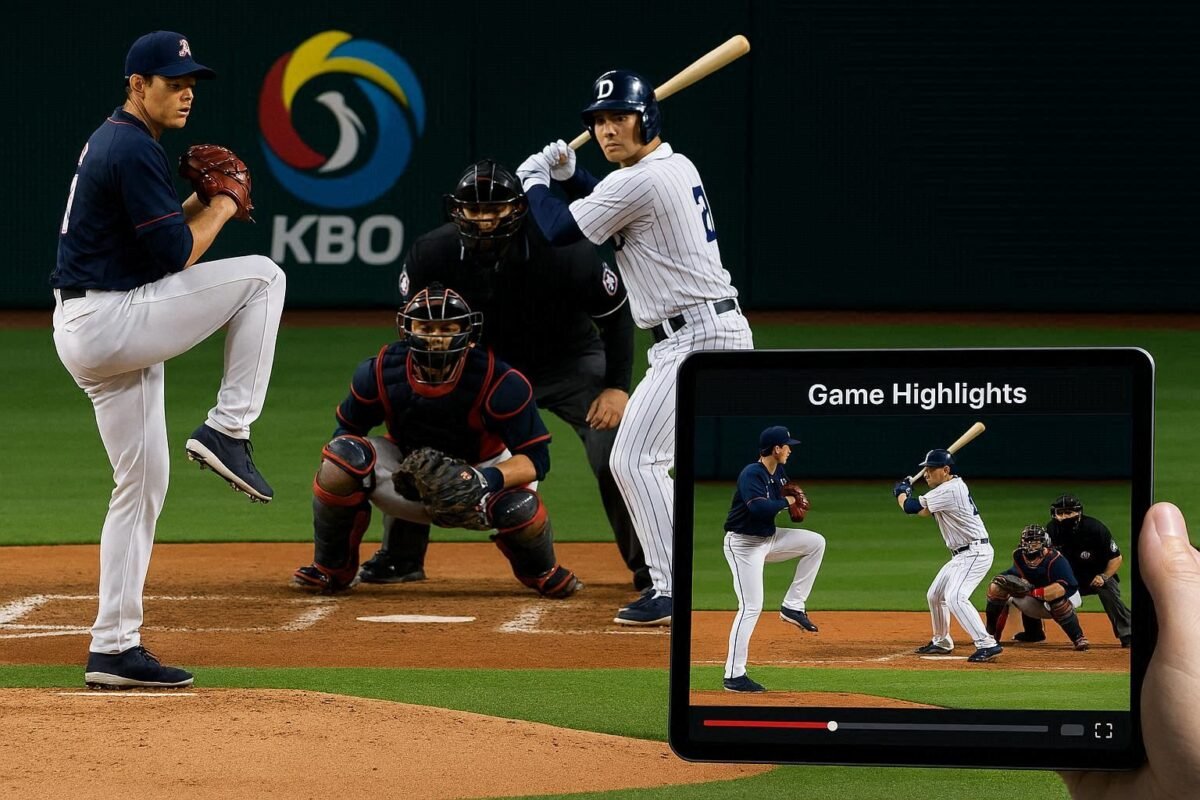
This hybrid engagement — blending offline attendance with online participation — reflects how modern sports ecosystems operate. It also connects to broader shifts in Korean sports media, such as the evolving landscape of baseball broadcasting and streaming (KBO Season Highlights and Streaming Shifts), which show how digital platforms are reshaping fan behavior across multiple sports.

Comparative Insight: Global Context

The K League’s playoff format can be compared to other football systems worldwide:

  • European Leagues: Many European leagues use direct promotion and relegation without playoffs, emphasizing season-long consistency.
  • English Football League (EFL): Similar to the K League, the EFL Championship uses playoffs for teams finishing below the champion, adding drama to promotion battles.
  • Unique Korean Balance: The K League’s combination of automatic promotion and playoff opportunities reflects a hybrid approach, balancing fairness with excitement.

This comparison helps beginners see how Korea’s system fits into global football traditions while maintaining its own identity.

Structural Insight: Why Playoffs Are Effective

The playoff format is effective for several reasons:

  • Maintains Competitiveness: Teams fight until the final matchday, knowing that playoff spots are at stake.
  • Encourages Development: Clubs invest in youth academies and player development to remain competitive across both divisions.
  • Boosts Engagement: Playoffs generate media coverage and fan interest, strengthening the league’s visibility.

These structural benefits ensure that the K League remains dynamic and engaging.

Broader Implications: Sports and Society

The K League playoff format illustrates broader principles of how sports intersect with society:

  • Fairness and Accountability: Teams are rewarded or penalized based on performance, reinforcing values of meritocracy.
  • Community Identity: Promotion and relegation battles energize local communities, strengthening civic pride.
  • Economic Impact: Playoff matches attract spectators, boosting local economies through tourism and hospitality.

These implications show how sports structures are embedded in broader cultural and societal frameworks.

Conclusion

The K League playoff format is more than a technical detail — it is a defining feature of Korean football. By rewarding champions with automatic promotion while giving other strong teams a chance through playoffs, the system balances fairness, opportunity, and excitement. For beginners, understanding this format provides insight into how leagues can be structured to maintain competitiveness and engagement.

For Gyeonggi-do clubs like FC Anyang and Suwon FC, the playoff system directly shapes their futures, connecting local communities to national narratives. As the 2026 season progresses, fans across Korea will watch closely, knowing that every match carries the potential to reshape the league’s landscape.


Further Reading

KBO Season Highlights Streaming Shifts

Introduction

The Korea Baseball Organization (KBO) has announced expanded streaming coverage for the 2026 season, introducing new digital access points for fans both in Korea and abroad. This development reflects a broader transformation in sports broadcasting, where streaming platforms are increasingly central to how audiences consume live games. For beginners, this moment offers a chance to understand how broadcasting rights work, why streaming differs from traditional television, and how these shifts affect everyday sports engagement.

Context: Expanded Streaming Coverage

The KBO’s 2026 season rollout includes:

  • New Platforms: Partnerships with domestic and international streaming services to broaden access.
  • Mobile Integration: Enhanced apps that allow fans to watch games on smartphones and tablets.
  • Global Reach: Expanded coverage for overseas audiences, particularly in North America and Southeast Asia.
  • Interactive Features: Real-time stats, multi-angle viewing, and fan chat functions integrated into streams.

This expansion ensures that fans can follow their teams more flexibly, whether at home, on the go, or abroad.

Industry Trend Angle: How Broadcasting Rights Work

For beginners, understanding broadcasting rights is key to grasping why these changes matter:

  • Ownership of Rights: The league (KBO) owns the rights to its games and decides how they are distributed.
  • Negotiation with Broadcasters: TV networks or streaming platforms pay for the rights to show games.
  • Exclusive vs. Shared Rights: Some platforms may have exclusive coverage, while others share rights across multiple outlets.
  • Streaming vs. TV: Traditional TV relies on scheduled broadcasts, while streaming offers on-demand flexibility and interactive features.

This system explains why fans sometimes need multiple subscriptions to access all games, and why shifts in rights agreements directly affect accessibility.

Educational Value: Why Media Rights Matter

Media rights agreements are not just business deals—they shape the entire sports ecosystem:

  1. Accessibility: Expanded streaming ensures more fans can watch games, regardless of location.
  2. Viewing Habits: Fans increasingly prefer mobile and on-demand viewing, shifting away from fixed TV schedules.
  3. Revenue Streams: Rights agreements generate significant income for leagues, funding player salaries and infrastructure.
  4. Cultural Impact: Broadcasting decisions influence how communities engage with sports, from local watch parties to global fan bases.

Understanding these dynamics helps readers see how industry-level decisions filter down to everyday experiences.

Regional Relevance: Goyang’s Sports Engagement

For residents of Goyang, broadcasting structures have direct relevance:

  • Basketball and Baseball: Fans follow both local basketball teams like the Goyang Sono Skygunners and national baseball through the KBO.
  • Community Connection: Expanded streaming allows Goyang residents to engage with sports even if they cannot attend games in person.
  • Youth Inspiration: Local academies benefit from accessible broadcasts, inspiring young athletes to pursue careers in sports.
  • Economic Ripple: Local businesses gain from increased sports visibility, as fans gather in cafes and venues to watch streamed games.

This regional lens shows how national broadcasting decisions shape local sports culture. For example, the Skygunners’ playoff success has been covered in detail (Goyang Sono Skygunners Secure Key Win in KBL Playoffs), illustrating how broadcasting and reporting structures connect local victories to national narratives.

Fan Culture: Streaming and Participation

Streaming shifts also transform fan culture:

  • Interactive Viewing: Fans can comment, vote in polls, and share highlights instantly.
  • Global Conversations: Overseas fans join discussions, expanding Korea’s baseball community worldwide.
  • Generational Bridge: Younger fans embrace digital platforms, while older fans adapt to new viewing habits.
  • Personalized Content: Streaming services tailor recommendations, highlights, and stats to individual preferences.

This participatory culture reflects how technology enhances the emotional and communal aspects of sports.

Risk Awareness: Challenges of Streaming Expansion

While streaming offers opportunities, it also presents challenges:

  • Subscription Fragmentation: Fans may need multiple services to access all games.
  • Digital Divide: Not all communities have equal access to high-speed internet.
  • Data Privacy: Platforms collect user data, raising questions about security and consent.
  • Over-Saturation: Too many options can overwhelm fans, complicating viewing choices.

Recognizing these risks ensures that streaming expansion remains inclusive and sustainable.

Historical Context: KBO Broadcasting Evolution

The KBO’s broadcasting journey reflects broader shifts in sports media:

  • 1980s–1990s: Games aired primarily on national television.
  • 2000s: Cable networks expanded coverage, introducing specialized sports channels.
  • 2010s: Online highlights and social media supplemented broadcasts.
  • 2020s: Streaming became central, aligning with global trends in sports consumption.

This trajectory shows how the KBO has continually adapted to changing technologies and fan expectations.

Broader Implications: Korea on the Global Stage

The KBO’s streaming expansion has implications beyond baseball:

  • National Branding: Korea positions itself as a leader in digital sports innovation.
  • Cultural Diplomacy: International coverage fosters cultural exchange and strengthens Korea’s global image.
  • Economic Growth: Expanded reach attracts sponsors, advertisers, and investors.
  • Future Aspirations: The KBO’s model could inspire other Korean leagues to pursue similar strategies.

Conclusion

The Korea Baseball Organization’s expanded streaming coverage for the 2026 season highlights a pivotal shift in sports broadcasting. For beginners, it offers a chance to understand how media rights agreements work, why streaming differs from traditional TV, and how these decisions affect accessibility and fan culture. For Goyang residents, it underscores how national broadcasting structures influence local sports engagement, connecting basketball and baseball communities through shared digital experiences.

As streaming becomes central to sports consumption, the KBO’s moves ensure that baseball remains accessible, interactive, and globally relevant—reshaping how fans experience the game for generations to come.


Further Reading

Goyang Sono Skygunners Secure Key Win in KBL Playoffs

Introduction

The Goyang Sono Skygunners advanced in the Korean Basketball League (KBL) playoffs this past weekend with a decisive victory that energized their fans and reinforced their reputation as one of the league’s rising forces. For seasoned basketball followers, the win was another thrilling chapter in the postseason. For newcomers, however, it also provided a perfect opportunity to understand how playoff structures differ from the regular season in Korean basketball. Unlike the accumulation of points and standings during the regular season, playoffs are elimination-based, meaning every win or loss directly impacts a team’s survival.

Context: A Crucial Playoff Victory

The Skygunners’ victory was more than just another game—it was a turning point in their playoff campaign. In the KBL, playoff games carry heightened stakes:

  • Single-Elimination Pressure: Each matchup can determine whether a team advances or goes home.
  • Momentum Building: A decisive win boosts confidence and sets the tone for the next round.
  • Community Impact: For Goyang, the victory strengthens local pride and energizes the fan base.

This win not only secured advancement but also showcased the Skygunners’ resilience under pressure.

Beginner Guide: How the KBL Playoffs Work

For new fans, understanding the playoff format is essential. The KBL playoff system differs significantly from the regular season:

  • Regular Season: Teams play a set number of games, earning points for wins. Standings are determined by accumulated records.
  • Playoffs: The top teams from the regular season qualify. From there, the competition shifts to a bracket format.
  • Series-Based Progression: Teams face off in best-of series (often best-of-five or best-of-seven). Advancement depends on winning the majority of games in the series, not on overall points.
  • Elimination Stakes: Losing a series means elimination, while winning allows progression to the next round.

This structure ensures that every game matters, creating drama and intensity unmatched by regular season play.

Educational Value: Regular Season vs. Playoffs

The difference between regular season and playoff formats highlights key lessons about sports structures:

  1. Consistency vs. Clutch Performance: Regular seasons reward consistency across months, while playoffs reward peak performance under pressure.
  2. Accumulated Points vs. Series Wins: Regular season standings are cumulative, but playoff advancement depends solely on winning a series.
  3. Fan Experience: Playoffs heighten excitement because each game can alter a team’s fate.
  4. Strategic Adjustments: Coaches must adapt quickly in playoffs, often changing tactics game-to-game within a series.

Understanding these distinctions helps fans appreciate why playoff basketball feels so different from regular season competition.

Regional Relevance: Goyang’s Connection

The Skygunners are more than just a basketball team—they are a symbol of Goyang’s sporting identity:

  • Local Pride: Each playoff win resonates throughout the city, reinforcing community spirit.
  • Economic Impact: Playoff games attract visitors, benefiting local businesses and vendors.
  • Youth Inspiration: Local sports academies look to the Skygunners as role models, inspiring young athletes to pursue basketball.
  • Cultural Identity: The team’s success strengthens Goyang’s reputation as a city that values sports and community engagement.

This regional connection makes the Skygunners’ playoff run more than just a sporting event—it’s a cultural milestone.

Fan Culture: Playoff Atmosphere

Playoffs transform fan culture in unique ways:

  • Heightened Emotion: Every possession feels critical, amplifying fan reactions.
  • Community Gatherings: Fans organize watch parties and local events to celebrate victories.
  • Digital Engagement: Social media buzz intensifies, with highlights, memes, and debates spreading rapidly.
  • Generational Bonding: Playoffs bring together older fans who remember past seasons and younger fans experiencing the drama for the first time.

This atmosphere underscores how playoffs are not just about basketball—they are about shared experiences.

Risk Awareness: Challenges of Playoff Formats

While playoffs are thrilling, they also present challenges:

  • Pressure on Players: The elimination format can create immense stress, impacting performance.
  • Injury Risks: Intense competition increases the likelihood of injuries.
  • Fan Expectations: Communities may place heavy expectations on teams, creating pressure beyond the court.
  • Economic Disparities: Smaller-market teams may struggle to compete with larger franchises that have more resources.

Recognizing these challenges helps fans and institutions balance excitement with realism.

Historical Context: KBL Playoff Evolution

The KBL playoff system has evolved over time:

  • Early Years: Playoffs were introduced to add drama and ensure fair competition beyond regular season standings.
  • Expansion: As the league grew, playoff formats adapted to include more teams and longer series.
  • Modern Era: Today’s playoffs are highly structured, with clear brackets and series formats that mirror global basketball standards.

This evolution reflects the league’s commitment to maintaining competitiveness and fan engagement.

Broader Implications: Korea’s Basketball Landscape

The Skygunners’ playoff success highlights broader trends in Korean basketball:

  • Growing Popularity: Playoffs attract national attention, boosting basketball’s profile in Korea.
  • Media Coverage: Digital platforms amplify playoff narratives, making games accessible to wider audiences.
  • Cultural Diplomacy: Korean basketball gains recognition internationally, showcasing the nation’s sporting culture.
  • Future Aspirations: Success stories like the Skygunners inspire investment in youth programs and infrastructure.

For a deeper look at how outcomes in sports are often misattributed to skill rather than context, see Why Outcomes Are Misattributed to Skill. This perspective complements playoff analysis by showing how external factors—such as luck, matchups, or officiating—can shape results just as much as raw talent.

Conclusion

The Goyang Sono Skygunners’ decisive playoff victory is more than a sports headline—it’s a lesson in how playoff structures differ from regular season formats, a case study in community identity, and a celebration of basketball’s cultural impact in Korea. For new fans, the game offers a beginner’s guide to understanding elimination-based brackets. For Goyang, it reinforces local pride and strengthens the city’s connection to the national sports landscape.

As the Skygunners continue their playoff journey, each game will carry heightened stakes, reminding fans that in the postseason, survival depends not on accumulated points but on the ability to win when it matters most.

Further Reading

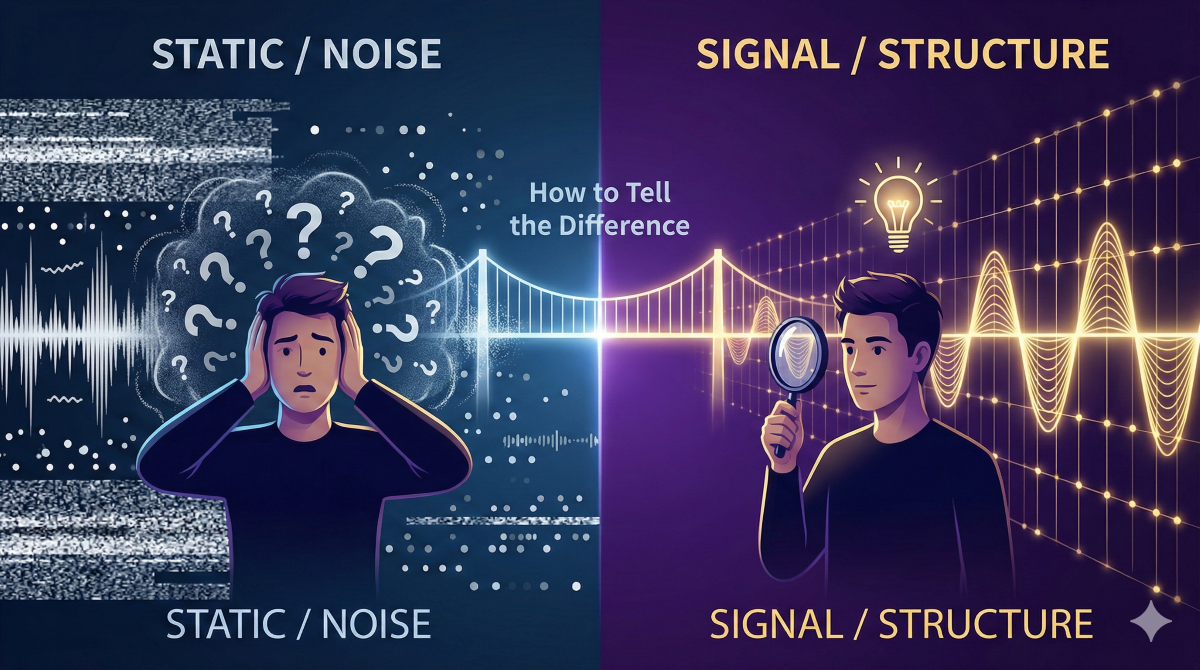
Is it a Signal or Just Static? How to Tell the Difference

Have you ever looked up at the sky and seen a cloud that looked exactly like a rabbit? Or perhaps you were listening to the radio and thought you heard a voice in the white noise between stations? Your brain is a wonderful tool, but it has a very specific habit: it hates randomness. It wants everything to have a reason, a shape, or a “structure.”

A smart friend would tell you that the world is full of “noise”—random events that happen for no reason at all. But because we want to feel in control, we often mistake that noise for a “signal,” which is a real, meaningful pattern. In 2026, as we deal with more data than ever before, learning how to tell the difference between the two is the most important skill you can have.

The Brain as a Pattern Machine

To understand why we make this mistake, we have to look at our ancestors. Thousands of years ago, noticing a pattern was a matter of life or death. If a human saw the grass move and thought, “That might be a tiger,” and ran away, they survived. Even if it was just the wind, it was safer to assume it was a tiger.

Because of this, our brains became “over-tuned” to find patterns. We are programmed to find a signal even when there is only static.

In the modern world, this habit shows up in strange ways. We see a “lucky” shirt that helps our favorite team win. We see a “pattern” in the stock market after only two days of growth. We take a random accident and turn it into a “system.” This is the core of the problem: we are using a survival tool from the jungle to try and understand a complicated, random world.

What is “Noise” Exactly?

In science and math, “noise” refers to all the extra, random information that doesn’t matter. Imagine you are trying to listen to a friend talk at a very loud party. Your friend’s voice is the signal. The loud music, the clinking of glasses, and the other people shouting are the noise.

If the music is too loud, you might think your friend said “Go home” when they actually said “Phone.” You mistook the noise for a signal.

In life, noise is everywhere. It’s the random change in the weather, the tiny movements in the price of gold, or the fact that you happened to meet an old friend at the grocery store. These things are often just coincidences. They don’t have a deep meaning or a hidden rule behind them.

The Danger of “Clustering”

One reason we mistake noise for structure is something called “clustering.” Most people think that random things should look perfectly spread out. If you throw 100 grains of rice on a table, you expect them to be even.

However, true randomness is messy. In a random pile of rice, some grains will land right on top of each other, creating a little group or “cluster.” When we see that cluster, our brain screams, “Look! Those grains were put there on purpose! There must be a reason!”

This happens a lot in business and gambling. If a specific number comes up three times in a row on a roulette wheel, people start betting on it. They think they found a “hot” pattern. But it’s usually just a random cluster. The wheel doesn’t remember what happened last time. It’s just noise.

Why We Want to Believe in Structure

Mistaking noise for structure makes us feel powerful. If the world is just a mess of random events, then we can’t predict the future. That is a very scary thought for most people.

By inventing a “system” or a “reason,” we feel like we have a map. Even if the map is wrong, it makes us feel better than having no map at all. This is why people believe in superstitions or “get rich quick” schemes. They want to believe they have found the secret signal that everyone else is missing.

How to Tell the Difference

So, how can you stop yourself from being fooled by the static? A smart friend would give you these three rules:

  1. Wait for More Data: A pattern that happens twice is a coincidence. A pattern that happens ten times might be a signal. Don’t jump to a conclusion after just one or two events.

  2. Ask “What Else Could it Be?”: Before you decide you’ve found a secret rule, ask yourself if the result could just be luck. If you can explain it with “it was just a random accident,” it probably was.

  3. Check the Source: Real signals usually have a logical cause. If you think a specific food makes you run faster, is there a scientific reason why? If not, it’s likely just noise.

The world in 2026 is louder and faster than ever. We are surrounded by charts, news, and “experts” telling us they have found the latest trend. Most of what they are seeing is just noise.

By training your brain to accept that some things happen for no reason, you actually become much smarter. You stop wasting your energy chasing ghosts in the static. When a real signal finally appears—a true, meaningful pattern—you will be the one who is calm enough and clear-headed enough to see it.

The Information Hierarchy in Sports Prediction Markets

Sports‑based prediction markets do not treat all information equally. Some inputs move prices instantly, while others leave almost no trace. These differences follow a clear hierarchy that determines how information is weighted, when it becomes important, and how strongly it influences implied probabilities.

This vertical distribution of data is a core element of the Additional information, which examines how different tiers of access and data quality influence market movements. Understanding this hierarchy explains why prices shift at specific moments. As noted in comparisons between Related article, markets tied to real‑world events require far more complex information processing than systems driven by internal randomization.

Three Levels of Information and Their Pricing Power

Prediction markets classify information not by importance alone but by its ability to change uncertainty. The market prioritizes information that materially alters probability estimates.

Level 1: Structural & Confirmed Information

This is the highest tier. It includes verified, objective changes such as official injury confirmations, starting lineups, and significant weather shifts. These inputs directly alter probability estimates and almost always trigger immediate price adjustments because they remove a layer of unknown risk.

Level 2: Analytical & Contextual Information

This tier includes advanced performance metrics, historical matchup data, and tactical insights. These factors shape the initial modeling that produces opening prices. However, because they are often already incorporated into early estimates, they rarely cause major price movement close to the event unless a new analytical model gains sudden widespread adoption.

Level 3: Narrative & Perceptual Information

This includes media narratives, public sentiment, and “momentum” interpretations. These inputs have low statistical accuracy but can strongly influence collective behavior. Their impact on prices is indirect, driven by shifts in participation rather than changes in underlying probability.

How Liquidity Filters Information

Liquidity determines how strongly each information tier affects prices. In low‑liquidity markets, narrative‑driven information can dominate, and even minor news can cause large, volatile swings. Conversely, high‑liquidity markets resist sentiment‑driven movement and react primarily to Level 1 structural information, producing more stable and refined probability estimates. Liquidity acts as a filter that separates meaningful signals from noise.

Extending the Concept to Casino‑Style Systems

While sports‑based markets reveal the value of information through price movement, casino‑style systems embed probability logic directly into their design.

  • Embedded Probability: Casino games use fixed outcome sets and known probability distributions to create predictable long‑term expectations.

  • Pricing Structure: Payout ratios function as prices with built‑in margins, even though they are not displayed as market odds.

  • Bias and Liquidity: Player behavior cannot change the mathematical expectation, but higher participation (liquidity) causes results to converge more quickly toward theoretical averages.

Summary

The information hierarchy is the invisible framework that determines how probability becomes price. Despite their differences, both systems rely on the same underlying mathematics: they are not about predicting outcomes but about managing uncertainty. For more on the economic theory of how information is incorporated into prices, a foundational resource is the Efficient-market hypothesis on Wikipedia.

Casino Games vs. Sports‑Based Prediction Systems: Key Structural Differences

Casino‑style games and sports‑based prediction systems are often grouped under the broad category of “gambling,” yet they differ significantly in structure, risk dynamics, regulatory focus, and user experience. Understanding these differences is essential for cultural literacy, education, and balanced discussion.

This article explains the core distinctions between the two from a neutral, informational perspective. These structural differences also help explain why regulators apply different oversight mechanisms and legal standards to each activity, as discussed in regional regulatory comparisons. To better grasp the fundamental mechanics behind these platforms, it is helpful to look at a Related article which breaks down the mathematical and psychological drivers of each.

How Outcomes Are Determined

The primary difference lies in the origin of the result. In a casino, the outcome is generated by a closed system; in sports, the outcome is an external event that the system merely tracks.

Casino‑Style Games

Casino games—such as slots, blackjack, or roulette—are built around game‑based mechanisms. Outcomes are determined by:

  • Random Number Generators (RNGs): Software that produces unpredictable sequences.

  • Fixed Mathematical Systems: Pre‑defined probability structures (e.g., the 38 pockets on a roulette wheel).

  • Instantaneous Cycles: Results are generated and resolved entirely within the game’s hardware or software.

Sports‑Based Prediction Systems

Sports‑based systems rely on real‑world events such as football, basketball, or baseball. Outcomes depend on:

  • Human Performance: Athlete fitness, team strategy, and psychological form.

  • Environmental Variables: Weather conditions, home-field advantage, and officiating.

  • Delayed Resolution: Results take time to unfold over the course of a match or season.

Skill vs. Chance: The Role of Information

While both involve risk, the way participants interact with that risk varies based on the availability and utility of data.

  • Casino Games: Even when basic strategies exist (such as “Basic Strategy” in Blackjack), the house maintains a mathematical edge that cannot be overcome by information alone. Randomness is the dominant factor.

  • Sports‑Based Systems: Participants leverage team and player analysis, historical performance data, and statistical modeling. Information literacy and analytical skill significantly affect the quality of predictions, even though unpredictable “upsets” remain part of the game.

Risk Structure and Timing

The speed and frequency of participation are key psychological differentiators.

  • Casino Games: Results are immediate, and decisions occur in rapid, repeated cycles. This structure is designed around high-frequency, short-term engagement.

  • Sports‑Based Systems: Decisions are tied to real-world schedules. Users often wait hours or days for a match to conclude, which naturally encourages pre-event research and a more deliberate pace of participation.

Comparison Overview

CategoryCasino‑Style GamesSports‑Based Prediction Systems
Outcome BasisRandomized game mechanics (RNG)Real-world sports results
Role of SkillLimited (strategy-capped)High (analysis‑driven)
Time StructureInstant outcomes / High frequencyEvent-dependent / Low frequency
Data UseMinimal (probabilities are fixed)Extensive (dynamic statistics)
User RolePlayer interacting with a systemPredictor interpreting real events

Regulatory Focus and Educational Value

Because the risks differ, the oversight must follow suit. Casino regulation emphasizes the integrity of the machine (RNG audits and payout transparency), whereas sports regulation focuses on the integrity of the athlete (monitoring for match-fixing or point-shaving).

From an educational standpoint, casino systems are excellent for teaching the Law of Large Numbers and expected value. Sports-based systems, conversely, are useful for teaching predictive modeling, data interpretation, and how to assess risk amidst human variables.

Conclusion

Recognizing these distinctions is essential for responsible, informed, and balanced discussion. Treating them as identical oversimplifies their structure and social function. For an authoritative, in-depth look at casino game mechanics and fairness, the official Glossary of Gaming Terms from the American Gaming Association is a valuable resource.

Legal Differences in Gambling Regulation Across Regions

Gambling laws are not governed by a single global standard. Instead, they reflect each region’s legal traditions, cultural attitudes toward risk, and differing views on the role of the state in regulating gambling‑related activities. As gambling has moved online and crossed national borders, these regional differences have become more visible—and more consequential.

Understanding how gambling laws diverge across regions helps explain why enforcement, licensing, and consumer protection vary so widely around the world. These regulatory frameworks are often categorized into specific legal models that balance risk, accessibility, and supervision, as detailed in Related article. As discussed in cultural acceptance studies, social values often shape how these laws are written, interpreted, and enforced.

Drivers of Regional Legal Differences

Regional regulatory models are shaped by several foundational factors that influence not only the legality of gambling but also the strictness and priorities of control.

  1. Legal Traditions: Common Law jurisdictions often rely on case‑based interpretation and flexible regulatory frameworks, whereas Civil Law jurisdictions tend to codify detailed statutory rules.

  2. Government Dependence on Revenue: Some governments rely heavily on gambling‑related taxation for public revenue, which can influence how permissive their models become.

  3. Public Health Perspectives: Regions differ in whether gambling‑related harm is viewed as an individual responsibility or a broader social issue requiring public intervention.

  4. Regulatory Infrastructure: The administrative capacity to enforce laws and monitor digital activity varies significantly between countries.

Major Regional Regulatory Models

The global landscape can be broken down into three primary archetypes: Licensing, Monopoly, and Prohibition.

Europe

Europe does not operate under a unified gambling law. Each country maintains regulatory autonomy, resulting in a fragmented landscape. Many nations allow private operators through open licensing systems but enforce strict rules on consumer protection and advertising.

North America

Regulation is highly decentralized. In both the United States and Canada, authority is delegated to states or provinces, creating a patchwork of legal and illegal jurisdictions—even between neighboring regions.

Asia‑Pacific

Many countries adopt a restrictive baseline, emphasizing prohibition while allowing limited, controlled exceptions such as designated casino zones or state‑run lotteries. In regions like the Philippines, a centralized body like PAGCOR serves as both operator and regulator.

Middle East

Most countries maintain comprehensive bans based on religious and legal principles. Gambling is treated as a criminal offense, and cultural norms align closely with legal prohibitions.

Challenges of Cross‑Border Enforcement

The digital nature of online gambling complicates enforcement. An operator licensed in one country may be considered illegal in another, and enforcing domestic laws against foreign platforms is often technically difficult.

As a result, many governments rely on indirect enforcement tools, such as:

  • Payment blocking through financial institutions.

  • Domain access restrictions (IP filtering).

  • Administrative penalties for unlicensed activity.

Conclusion

Gambling regulation continues to evolve in ways that reflect regional priorities rather than converging toward a single global model. Jurisdictions with clear, enforceable rules tend to maintain transparent and manageable markets, while inconsistent systems risk pushing activity into unregulated spaces.

Understanding these legal differences provides valuable context for interpreting global regulatory trends and assessing how societies respond to digital‑era risks. For a detailed overview of the complex legal landscape in one specific country, you can refer to the official U.S. Government’s guide to Gambling Laws on USA.gov.

Cultural Acceptance of Gambling: Regional Differences and Global Perspectives

Cultural attitudes play a decisive role in how gambling‑related activities are perceived, regulated, and socially accepted. While laws determine what is formally permitted on paper, culture determines what is practically tolerated. These cultural norms shape public opinion, political decision‑making, and enforcement priorities, resulting in dramatically different gambling environments around the world.

Acceptance of gambling exists on a spectrum influenced by history, religion, economics, and collective experience. This divergence in perception is further explored in Additional information, which analyzes how cultural receptivity directly influences the design of regional regulatory frameworks. Understanding these cultural differences helps explain why gambling laws vary so sharply between regions. It also provides essential context for how legal frameworks operate in real social environments.

Regional Cultural Perspectives

  • Europe: In many parts of Europe, gambling is widely accepted when properly regulated. Long‑standing traditions such as national lotteries and horse racing have normalized gambling as part of leisure culture rather than a moral issue.

  • North America: Cultural attitudes vary significantly by region. Religious influence, local values, and differing views on personal responsibility create a patchwork of perspectives.

  • Asia‑Pacific: Many societies in this region associate gambling with financial harm or social instability. Caution and restraint are emphasized, reflecting broader cultural values around risk and responsibility.

  • Middle East: Religious and moral frameworks shape a strong cultural rejection of gambling. Legal prohibitions and cultural norms align closely, creating environments where gambling is socially unacceptable.

Key Factors That Shape Cultural Acceptance

Cultural acceptance is not merely a matter of personal preference; it is shaped by broader social structures:

  • Historical role of gambling in community life

  • Religious or moral teachings about chance and risk

  • Public awareness of gambling‑related harm

  • Associations between gambling and sports, leisure, or vice

These factors influence whether gambling is seen as entertainment, risk, opportunity, or moral concern.

Cultural Acceptance vs. Legal Reality

A critical insight is that cultural acceptance does not always align with legal status. In some regions, strict laws coexist with culturally tolerated informal markets. In others, gambling may be legal but socially discouraged. These gaps can lead to selective enforcement, informal participation, or public resistance to regulatory changes.

Cultural attitudes continually shape how gambling laws are written, enforced, and revised. For a concrete example of how policy is formed in one region, a key framework can be found in the Gambling Commission’s Licensing Objectives in the United Kingdom. This is directly relevant as seen in the context of Related article, which discusses how online gambling laws operate within these complex cultural frameworks.

Summary

The interaction between culture and law creates a unique regulatory footprint for every nation. While global digital platforms attempt to standardize the experience, local cultural values remains the primary filter through which gambling is judged and governed. Understanding this relationship is key to navigating the global landscape of regulated entertainment.

Online Gambling Laws and Regulations: A Global Legal Overview

The rise of digital platforms has shifted gambling activity from physical venues to borderless online environments. This transition has forced governments to adapt legal frameworks originally designed for casinos and betting shops to an ecosystem where location, enforcement, and user behavior operate under entirely different conditions. As a result, online gambling regulation has become one of the most complex and fragmented areas of modern law.

Despite significant differences between countries, most online gambling laws are built around similar policy concerns. As seen in global sports engagement cultures, each nation’s cultural and social attitudes strongly influence the strictness and direction of its regulatory approach. This evolving landscape is further detailed in the Related article, which explores the regional legal models and structural differences that define the global regulatory terrain.

Why Online Gambling Is Regulated Differently From Offline Gambling

Online environments introduce risks and legal challenges that do not exist in physical settings. Digital access removes natural barriers such as location, operating hours, and face‑to‑face identity verification. For this reason, regulators treat online gambling not as an extension of traditional gambling, but as a distinct category requiring its own safeguards.

Key regulatory differences typically arise from:

  • Remote access that increases the frequency and speed of participation

  • Difficulty verifying age and identity online

  • Cross‑border operations involving multiple legal jurisdictions

  • Lack of a physical presence for operators within the user’s home country

Licensing Systems and Consumer Protection Measures

Licensing is the foundation of most legal online gambling markets. A licensing regime typically requires financial stability, technical integrity of digital platforms, and compliance with operational standards set by regulatory authorities. Licenses give regulators administrative control over operators and establish accountability.

To protect consumers, many jurisdictions mandate:

  • Age and identity verification (KYC): Mandatory “Know Your Customer” protocols to prevent underage access.

  • Responsible Gaming Tools: Deposit limits, time limits, and self‑exclusion options.

  • Technical Fairness: Independent technical testing to ensure fairness and system reliability.

Financial Controls and Anti‑Money Laundering (AML) Requirements

Because online platforms process large volumes of digital transactions, they are closely integrated with AML and financial compliance systems. As of 2026, operators in many jurisdictions must follow strengthened standards aligned with the FATF Recommendations, which mandate that all casinos (including internet-based ones) perform customer due diligence and report suspicious transactions.

Advertising Restrictions and Taxation Policies

Digital advertising can target minors and vulnerable groups with precision, prompting strict regulatory controls. Common restrictions include limits on promotional messaging, mandatory responsible‑use warnings, and restrictions on advertising placement. Taxation policies also vary widely; some countries impose taxes on gross gaming revenue (GGR), while others apply transaction‑based levies. These structures influence whether operators choose to participate in regulated markets.

Cross‑Border Enforcement and Policy Trade‑Offs

Governments often attempt to restrict unlicensed operators through payment blocking via financial institutions or domain access restrictions. However, technical limitations make complete enforcement difficult. For this reason, many jurisdictions adopt a regulated‑market approach rather than an outright ban, aiming to protect vulnerable populations while maintaining oversight.

Global Cooperation and Regulatory Standards

International regulatory bodies increasingly collaborate to share best practices. The International Association of Gaming Regulators (IAGR), for example, provides a forum for discussing cross-border enforcement and regulatory transparency. Their mission focuses on advancing the effectiveness of gaming regulation in an increasingly connected world.

Understanding these frameworks helps contextualize how different countries manage digital‑era risks and why regulatory models vary so widely.

Global Differences in Sports Engagement Culture and the Korean Perspective

Sports engagement varies widely across countries, shaped by legal frameworks, social values, and the ways people participate in sports. In some regions, sports‑related activities are viewed as a natural extension of fandom and entertainment. In others, including Korea, they are approached with strict caution or legal restrictions.

This article examines global sports engagement cultures from an educational, non‑promotional perspective and explains how they differ from Korean cultural norms. This divergence in perception is often rooted in deep-seated societal values, as explored in Related article, which analyzes how cultural receptivity shapes the design of regional regulatory frameworks.

How Sports Engagement Is Viewed Internationally

In many countries, sports engagement extends beyond simple spectating. It is often treated as a data‑driven hobby that incorporates statistics, analysis, and strategic thinking. These activities typically operate within clear regulatory systems that emphasize consumer protection and responsible participation.

In these environments:

  • Sports fandom and analytical hobbies naturally overlap

  • Statistical interpretation becomes part of how fans understand the game

  • Regulatory bodies emphasize transparency and responsible use

  • Media integrates real‑time data and analysis into sports coverage

Regional Characteristics of Sports Engagement Culture

  • United Kingdom: Deeply embedded in everyday life with a strong connection between major sports (e.g., football, horse racing) and analytical communities.

  • United States: Rapid growth of data‑driven sports engagement following state‑level legalization, heavily integrating analytics and media coverage.

  • Europe (General): Treated as a regulated entertainment industry with an emphasis on participant responsibility and data literacy.

  • Australia: High engagement during major sporting events, with public discussions focusing on balancing accessibility with consumer safeguards.

The Korean Perspective: A Prevention‑Focused Culture

Korea approaches sports engagement very differently due to strict legal restrictions and a strong social stigma surrounding gambling‑related activities. Cultural values emphasize restraint, responsibility, and public safety, resulting in a fan culture centered on spectatorship rather than analytical participation.

Korean systems prioritize harm prevention and addiction awareness over entertainment. This creates a clear contrast between the entertainment‑oriented approach common in many Western countries and the risk‑prevention approach that defines Korean policy and public perception.

Summary Comparison

CategoryMany Overseas RegionsKorea
Legal EnvironmentRegulated and permittedHighly restricted
Social PerceptionEntertainment / analytical hobbyNegative / risk‑focused
Educational FocusData literacy, statistical interpretationAddiction prevention, risk awareness
Media IntegrationCommon in sports broadcastsStrictly limited

Responsible Participation and Global Standards

Despite regional differences, global trends increasingly emphasize consumer protection, psychological risk awareness, and transparency in regulation. Understanding these cultural contexts helps individuals interpret global sports media responsibly and maintain healthy perspectives within their own legal boundaries.

For example, research into the Additional information highlights how market-driven systems evolve under different regulatory environments. For more on Korea’s specific legal stance, an official government summary can be found in the Korea.net overview on Gaming & Lottery policies.