

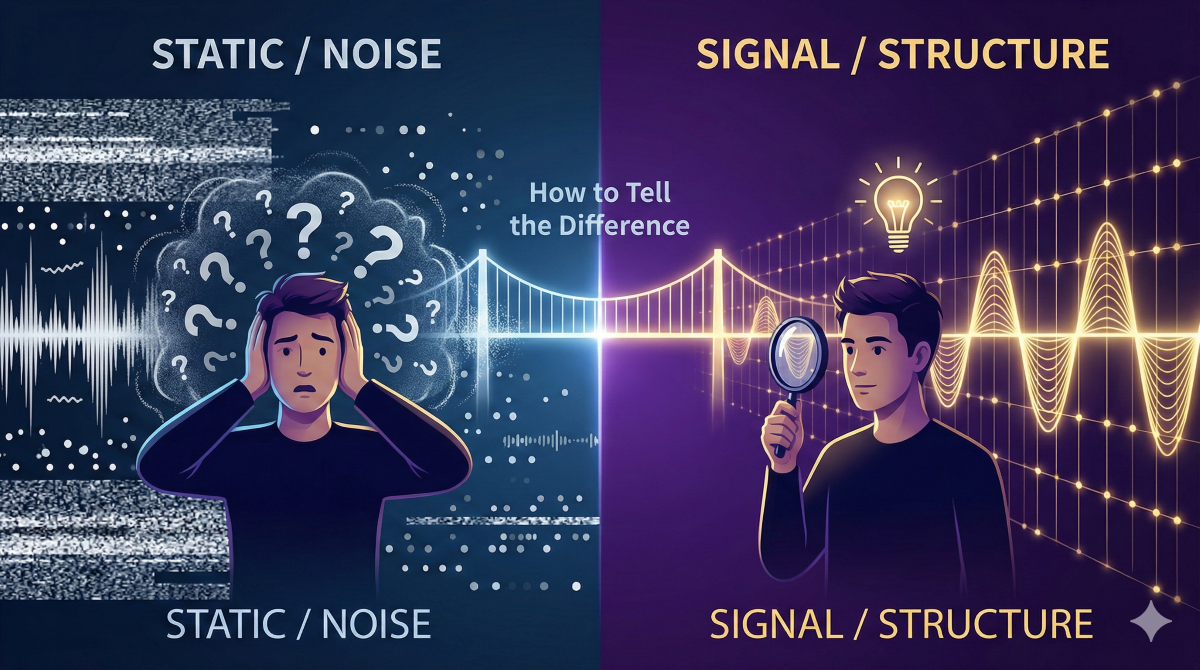



Why Frequent Feedback Increases Certainty Faster Than Accuracy
In many modern systems, feedback is immediate, frequent, and highly visible. Scores update instantly, results appear in real time, and performance signals arrive continuously. While this abundance of feedback is often assumed to improve learning and decision quality, it can produce an unintended effect: confidence inflation.
This phenomenon is a core component of the illusion of mastery, where high-frequency cycles distort our sense of competence. More details on this can be found in the Related article, which examines how frequency bias and the illusion of proficiency shape our judgment.
What Feedback-Heavy Systems Are
Feedback-heavy systems are those where outcomes arrive with minimal delay and high frequency. These systems are characterized by:
Rapid outcome cycles
Continuous performance signals
High visibility of results
Short intervals between action and response
Their defining feature is frequency—not necessarily the quality or long-term informativeness of feedback.
Confidence vs. Accuracy
A common assumption is that confidence and accuracy improve together. In reality, they follow different paths:
Accuracy improves through structured calibration, sufficient data, and proper interpretation over time.
Confidence grows through familiarity, reinforcement, and repeated confirmations—even when actual accuracy remains static.
Frequent feedback amplifies reinforcement before calibration can catch up. This dynamic connects with how numerical signals feel predictive even when they’re not accurate—a concept explored in Additional information.
How Feedback Inflates Confidence
Frequent feedback creates reinforcing loops that inflate confidence:
Repetition bias: Seeing similar outcomes makes the task feel familiar, which the brain mistakes for mastery.
Confirmation weighting: Feedback that matches expectations is absorbed quickly, while contradictory signals are downplayed.
Short-term validation: Immediate responses provide a feeling of reassurance, regardless of long-term correctness.
Over time, these loops produce subjective certainty that’s not supported by deeper knowledge or predictive power.
Why Confidence Resists Correction
Once heightened, confidence becomes self-reinforcing. Contradictory feedback is dismissed as noise, errors are attributed to external causes, and successes are credited to internal ability. This asymmetry slows correction and erodes calibration, making overconfidence persist even in the face of contrary evidence.
Structural Consequences of Confidence Inflation
Confidence inflation reliably produces an overestimation of skill, resistance to reassessment, and a tendency to misread short-term signals as meaningful patterns. These outcomes aren’t personal flaws; they are structural consequences of how feedback is delivered and processed.
Summary
Confidence responds to volume, while accuracy responds to quality and structure. Understanding this helps explain why people feel certain even in unpredictable environments.
A well-studied cognitive bias that captures this misalignment is the overconfidence effect, where subjective confidence exceeds objective accuracy. Research shows that individuals often report confidence levels higher than their actual performance warrants, revealing a systematic gap between perceived and actual correctness.