

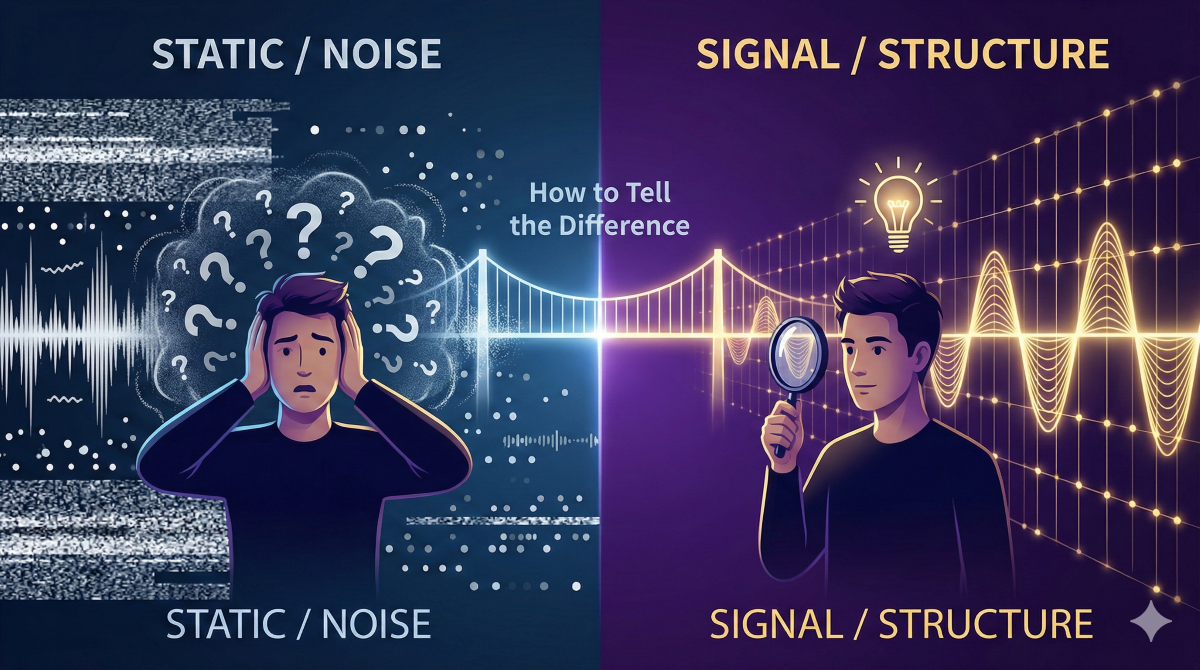



Systems built on probability often appear objective, but they are ultimately shaped by human behavior. Numerical outputs may look mathematical, yet the underlying “prices” reflect collective perception as much as statistical modeling. Public bias plays a central role in how probability signals are interpreted, reshaped, and sometimes distorted. Understanding this dynamic explains why implied probabilities can drift away from actual likelihoods.
These distortions are not accidental. They arise naturally in environments where human preference interacts with probabilistic structure. This phenomenon is particularly evident in how people perceive consecutive wins, a topic explored in Additional information, which examines the illusion of advantage that stems from outcome clustering. As discussed in the limits of single‑event probability, probability describes long‑term frequency, not individual outcomes—creating a structural gap that human behavior readily fills.
The Difference Between True Probability and Demand
True probability describes how often an outcome should occur under consistent conditions. It exists independently of opinion, popularity, or narrative. Demand, by contrast, reflects where people choose to direct their attention and resources. Human‑driven systems operate at the intersection of these two forces. They may begin with a probability estimate, but they must respond to shifts in collective behavior. When demand becomes imbalanced, the “price” moves—even if the underlying probability has not changed.
How Public Bias Manifests in Practice
Public bias refers to consistent patterns in how large groups interpret events. These patterns are emotional, narrative‑driven, and remarkably persistent across contexts. Common tendencies include favoring well‑known individuals, overvaluing recent performance, and trusting storylines more than long‑term data. These tendencies do not change what actually happens, but they do change how collective attention and resources flow through the system.
Why Systems Adjust to Public Bias
Human‑driven systems do not aim to publish the most accurate probability estimate. Their goal is to maintain stability, balance exposure, and manage risk. When collective behavior becomes lopsided, the system faces concentrated vulnerability. To reduce this imbalance, it adjusts its “prices.” These adjustments do not correct bias—they accommodate it. Implied probability shifts because human behavior shifts.
Favorite Bias and Recency Bias
Two of the strongest forms of public bias are:
Favorite Bias: People gravitate toward outcomes that feel safe, even when the difference in probability is small. This pushes the system to adjust its signals toward perceived certainty.
Recency Bias: A single impressive performance is often misinterpreted as the beginning of a trend. Systems adjust because collective behavior follows the narrative.
Even Efficient Systems Can Be Biased
Efficiency does not mean objectivity. An efficient system is one that rapidly incorporates information and demand. If demand is biased, the system will efficiently reflect that bias. Efficiency institutionalizes bias rather than eliminating it. Thus, numerical signals should be interpreted as economic indicators of attention, sentiment, and risk distribution—not as pure statements of probability.
Summary
Public bias does not change reality, but it changes the signals used to interpret reality. Probability describes how often an outcome should occur, while implied probability describes how that likelihood is reshaped by margins, demand, and human psychology. Understanding this distinction clarifies why human‑driven systems often drift away from objective likelihoods and toward the patterns of collective behavior. For a foundational look at the psychological models behind such distortions, the official summary of Nobel Prize-winning research in behavioral economics provides essential context.