

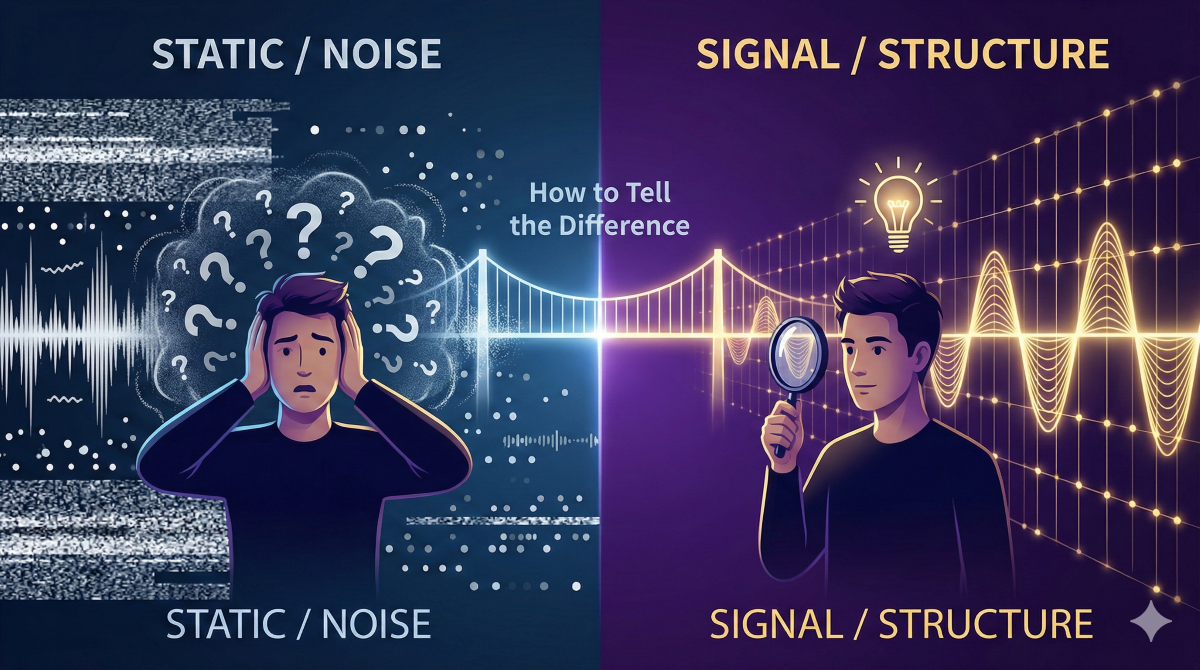



Probability does not reveal itself through calculation alone. It becomes more reliable through participation. Initial estimates may be built from models and historical data, but their accuracy depends on how a system responds to them. Liquidity—the volume and diversity of participation—is the mechanism that transforms theoretical probability into a more trustworthy approximation.
This evolution often reflects the broader context of Additional information, which examines the background of gradual market expansion and the phased introduction of systemic structures. Without liquidity, probability estimates remain provisional. With liquidity, they are tested, pressured, and refined until they reflect collective judgment rather than isolated assumptions. As discussed in the dynamics of public bias and probability distortion, early estimates often contain psychological or structural distortions that only active participation can correct or amplify.
What Liquidity Means in Human‑Driven Systems
Liquidity refers to both the amount of capital or activity flowing through a system and the number of independent participants contributing to it.
High liquidity reflects many competing viewpoints expressed through meaningful participation, resulting in more stable and resilient estimates.
Low liquidity allows a small number of participants to exert disproportionate influence, producing more volatile and easily distorted estimates.
Liquidity does not guarantee accuracy, but it determines how resistant a system is to noise, bias, and extreme opinions.
Why Probability Requires Market‑Like Participation
True probability cannot be directly observed; it must be inferred. Systems that aggregate many independent perspectives allow probability estimates to evolve as new information enters.
When diverse signals interact:
Extreme opinions are diluted
Weak assumptions are challenged
Estimates converge toward a shared equilibrium
Liquidity forces probability to mature. As liquidity increases, it becomes harder for any single input to shift the estimate. Each new contribution must compete with the accumulated weight of prior activity, meaning only strong information can meaningfully move the system.
The “Closing Estimate”: Liquidity at Its Peak
In many probabilistic environments, the most reliable estimate is the one formed at the point of maximum participation—often referred to as the “closing” estimate.
This estimate is valued not because it is final, but because:
The widest range of information has been revealed
The largest number of participants has contributed
The estimate has absorbed and responded to the strongest available signals
By the time liquidity peaks, the system has incorporated nearly all meaningful data, producing the most refined approximation of underlying probability.
What Liquidity Cannot Do
Liquidity improves the precision of probability estimates, but it does not create truth. It cannot eliminate randomness or prevent rare outcomes. Probabilistic systems remain approximations, and liquidity merely sharpens those approximations—it does not resolve uncertainty. Probability is always an estimate, and liquidity is a tool for refining it, not a mechanism for guaranteeing outcomes.
Summary
Liquidity plays a crucial role in transforming theoretical probability into a more accurate, resilient estimate. High liquidity stabilizes estimates by incorporating diverse perspectives and resisting distortion. Understanding liquidity clarifies why probability estimates evolve and why the most reliable estimates emerge only when participation is at its peak. For a foundational overview of the related economic theory, see the article on the Efficient-market hypothesis on Wikipedia.