
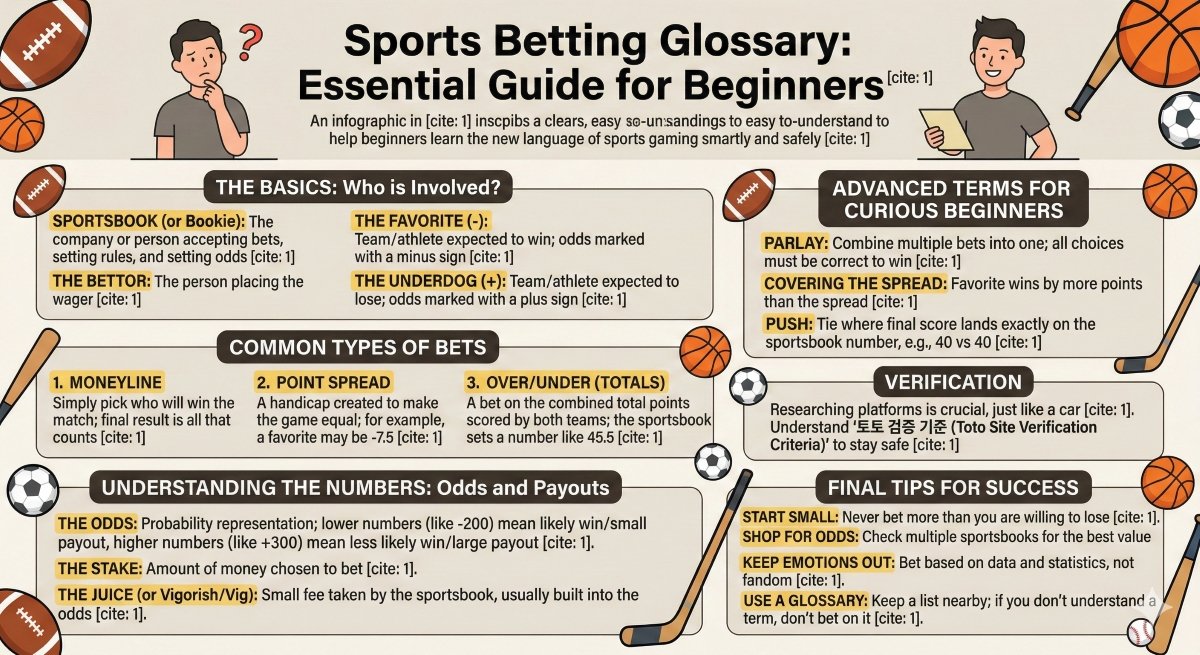




Entering the world of sports gaming can feel like learning a new language. You might hear people talking about “spreads,” “vig,” or “parlays” and feel completely lost. This is very common for beginners, especially for those whose first language isn’t English. However, understanding these terms is the first step toward enjoying the game safely and smartly. This guide breaks down the most important words you need to know in simple, easy-to-understand English.
The Basics: Who is Involved?
Before we look at the numbers, let’s identify the players in this environment.
The Sportsbook (or Bookie): This is the company or person that accepts your bets. They set the rules and the odds for each game.
The Bettor: This is you—the person placing the wager.
The Favorite: This is the team or athlete that is expected to win. In most systems, their odds are marked with a minus sign (-).
The Underdog: This is the team or athlete expected to lose. Their odds are usually marked with a plus sign (+).
Common Types of Bets
When you look at a list of games, you will see different ways to play. Here are the three most popular options for beginners.
1. Moneyline
This is the simplest way to play. You are simply picking who will win the match. If you bet on a team’s moneyline and they win, you win. It doesn’t matter by how many points they win; the final result is all that counts.
2. Point Spread
This is a bit more complex. The sportsbook creates a “handicap” to make the game equal. For example, if a strong team is playing a weak team, the strong team might have a spread of -7.5. This means they must win by more than 8 points for your bet to be successful. If they win by only 5 points, you actually lose the bet. This makes even one-sided games exciting to watch.
3. Over/Under (Totals)
In this version, you don’t care who wins. You are betting on the total number of points scored by both teams combined. The sportsbook sets a number, like 45.5. You decide if the actual total will be “Over” or “Under” that number.
Understanding the Numbers: Odds and Payouts
The numbers next to the teams tell you two things: how likely an event is to happen and how much money you will win.
The Odds: These represent the probability. Lower numbers (like -200) mean a win is very likely, but the payout is small. Higher numbers (like +300) mean a win is less likely, but you can win a lot more money.
The Stake: This is the amount of money you choose to bet.
The Juice (or Vigorish/Vig): This is a small fee the sportsbook takes for middleman services. It is usually built into the odds. This is how the “house” makes money regardless of who wins.
Advanced Terms for Curious Beginners
Once you feel comfortable with the basics, you might encounter these words:
Parlay: This is when you combine multiple bets into one. For example, you bet on three different football teams to win. To win a parlay, all your choices must be correct. If even one team loses, you lose the whole bet. These are risky but offer very high payouts.
Covering the Spread: If you bet on a favorite and they win by more points than the spread, they have “covered.”
Push: This happens if the final score lands exactly on the sportsbook’s number. For example, if the over/under is 40 and the total score is exactly 40, it is a tie. You get your original money back, but you don’t win any extra.
Why Context and Verification Matter
Learning the language is just the beginning. As you spend more time looking at different platforms, you will notice that not every site is the same. Some offer better odds, while others might have different rules for how they pay out your winnings.
It is very important to understand the environment you are playing in. Just like you would research a car before buying it, you should research where you are placing your bets. For users interested in understanding how Toto Site Verification Criteria works in real cases, this reference explains the process in more detail. Having a clear set of rules for how to judge a platform is the best way to stay safe.
Final Tips for Success
Start Small: Never bet more than you are willing to lose. Use your first few tries as a “learning fee.”
Shop for Odds: Different sportsbooks might have slightly different numbers. Checking two or three places can help you get the best value.
Keep Emotions Out: Don’t just bet on your favorite team because you love them. Look at the data and the statistics.
Use a Glossary: Keep a list like this one nearby when you are looking at a betting board. If you don’t understand a term, don’t put money on it.
The world of sports gaming is filled with specialized words, but they aren’t impossible to learn. By mastering the basic terms like Moneyline, Spread, and Odds, you can participate in the conversation with confidence. Remember, the goal is to have fun and stay informed.